


 Cart
Cart
 sales@molnova.com


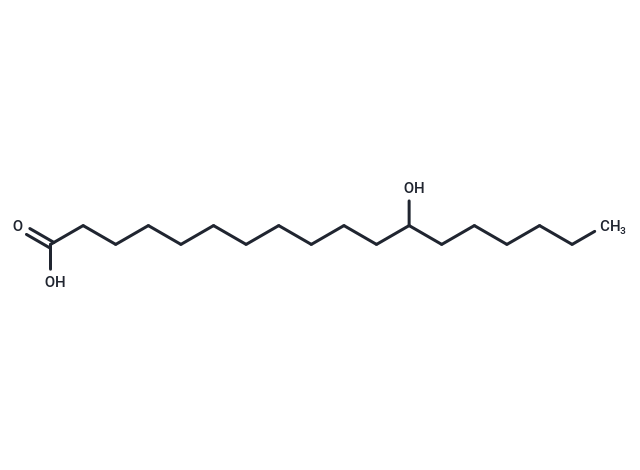
12-hydroxy Stearic Acid
CAS No. 106-14-9
12-hydroxy Stearic Acid( —— )
Catalog No. M34842 CAS No. 106-14-9
12-Hydroxy Stearic Acid is a low molecular weight organogel that prevents benzo(a)pyrene and squalene peroxide-induced hyperpigmentation in the skin.
Purity : >98% (HPLC)
 COA
Datasheet
HNMR
HPLC
MSDS
Handing Instructions
COA
Datasheet
HNMR
HPLC
MSDS
Handing Instructions
| Size | Price / USD | Stock | Quantity |
| 1 mL x 10 mM in DMSO | 28 | In Stock |


|
| 50MG | 27 | In Stock |
|
| 100MG | Get Quote | In Stock |
|
| 200MG | Get Quote | In Stock |
|
| 500MG | Get Quote | In Stock |
|
| 1G | Get Quote | In Stock |
|
Biological Information
-
Product Name12-hydroxy Stearic Acid
-
NoteResearch use only, not for human use.
-
Brief Description12-Hydroxy Stearic Acid is a low molecular weight organogel that prevents benzo(a)pyrene and squalene peroxide-induced hyperpigmentation in the skin.
-
Description12-Hydroxystearic acid is a structurally simple and cost-effective low molecular weight organogelator, and its metal salts and derivatives find roles in many important applications.
-
In Vitro12-Hydroxystearic acid (12HSA) and its derivatives have been studied in great detail due to it is effectiveness as a gelator and utility in lubricants.
-
In Vivo——
-
Synonyms——
-
PathwayOthers
-
TargetOther Targets
-
RecptorOthers
-
Research Area——
-
Indication——
Chemical Information
-
CAS Number106-14-9
-
Formula Weight300.48
-
Molecular FormulaC18H36O3
-
Purity>98% (HPLC)
-
SolubilityIn Vitro:?DMSO : 100 mg/mL (332.80 mM; Ultrasonic )
-
SMILESO=C(O)CCCCCCCCCCC(O)CCCCCC
-
Chemical Name——
Shipping & Storage Information
-
Storage(-20℃)
-
ShippingWith Ice Pack
-
Stability≥ 2 years
Reference
1. Gordon R, et al. Aggregation of 12-Hydroxystearic Acid and Its Lithium Salt in Hexane: Molecular Dynamics Simulations. J Phys Chem B. 2016;120(29):7164-7173. ?
molnova catalog



related products
-
(2S,3AS,7aS)-Octahyd...
(2S,3AS,7aS)-Octahydroindole-2-carboxylic acid is a valuable organic compound employed in life science research.
-
1-39-Corticotropin (...
Adrenocorticotropic Hormone (ACTH) (1-39) human(TFA),a member of the melanocortin family, is a melanocortin receptor agonist. It stimulates production of CS by the adrenals, but melanocortin receptors are also found in the central nervous system (CNS) and on immune cells.
-
FF-10101
FF-10101 is a potent inhibitor of FLT3.
