


 Cart
Cart
 sales@molnova.com


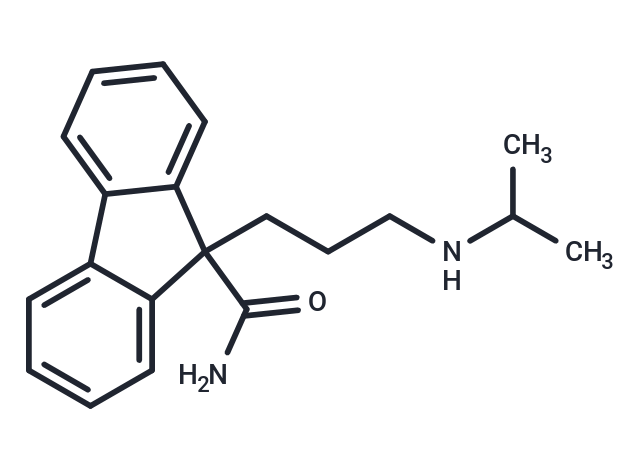
Indecainide
CAS No. 74517-78-5
Indecainide( —— )
Catalog No. M34624 CAS No. 74517-78-5
Indecainide (Ricainid) is a novel antiarrhythmic compound that is carcinogenic and can be used to study chronic stable ventricular arrhythmias secondary to coronary artery disease or cardiomyopathy.
Purity : >98% (HPLC)
 COA
Datasheet
HNMR
HPLC
MSDS
Handing Instructions
COA
Datasheet
HNMR
HPLC
MSDS
Handing Instructions
| Size | Price / USD | Stock | Quantity |
| 2MG | 246 | In Stock |


|
| 5MG | 411 | In Stock |
|
| 10MG | 562 | In Stock |
|
| 25MG | 866 | In Stock |
|
| 100MG | Get Quote | In Stock |
|
| 200MG | Get Quote | In Stock |
|
| 500MG | Get Quote | In Stock |
|
| 1G | Get Quote | In Stock |
|
Biological Information
-
Product NameIndecainide
-
NoteResearch use only, not for human use.
-
Brief DescriptionIndecainide (Ricainid) is a novel antiarrhythmic compound that is carcinogenic and can be used to study chronic stable ventricular arrhythmias secondary to coronary artery disease or cardiomyopathy.
-
DescriptionIndecainide (Ricainid) is a novel antiarrhythmic compound that is carcinogenic and can be used to study chronic stable ventricular arrhythmias secondary to coronary artery disease or cardiomyopathy.
-
In Vitro——
-
In Vivo——
-
Synonyms——
-
PathwayOthers
-
TargetOther Targets
-
RecptorOthers
-
Research Area——
-
Indication——
Chemical Information
-
CAS Number74517-78-5
-
Formula Weight308.42
-
Molecular FormulaC20H24N2O
-
Purity>98% (HPLC)
-
Solubility——
-
SMILESO=C(N)C1(C=2C=CC=CC2C=3C=CC=CC31)CCCNC(C)C
-
Chemical Name——
Shipping & Storage Information
-
Storage(-20℃)
-
ShippingWith Ice Pack
-
Stability≥ 2 years
Reference
molnova catalog



related products
-
GPR120 receptor agon...
A potent and selective GPR120 receptor agonist.
-
Chlorotoxin TFA (163...
Chlorotoxin TFA is a polypeptide derived from scorpion poison and ACTS as a chloride channel blocker.
-
Chamaejasmenin C
Chamaejasmenin C is a natural product for research related to life sciences.
