


 Cart
Cart
 sales@molnova.com


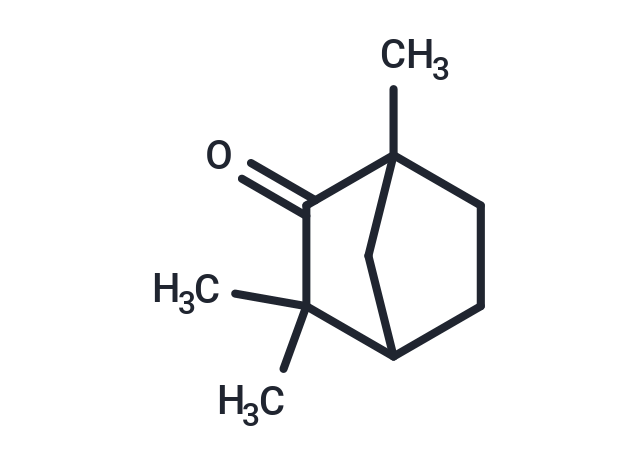
Fenchone
CAS No. 1195-79-5
Fenchone( —— )
Catalog No. M34596 CAS No. 1195-79-5
Fenchone (AI3-00736) is a plant-derived monoterpene with anti-inflammatory, antioxidant, wound healing, antidiarrheal, antifungal, anti-injurious, and bronchodilator activities and is used in the study of Irritable Bowel Syndrome (IBS-C).
Purity : >98% (HPLC)
 COA
Datasheet
HNMR
HPLC
MSDS
Handing Instructions
COA
Datasheet
HNMR
HPLC
MSDS
Handing Instructions
| Size | Price / USD | Stock | Quantity |
| 10MG | 28 | In Stock |


|
| 100MG | Get Quote | In Stock |
|
| 200MG | Get Quote | In Stock |
|
| 500MG | Get Quote | In Stock |
|
| 1G | Get Quote | In Stock |
|
Biological Information
-
Product NameFenchone
-
NoteResearch use only, not for human use.
-
Brief DescriptionFenchone (AI3-00736) is a plant-derived monoterpene with anti-inflammatory, antioxidant, wound healing, antidiarrheal, antifungal, anti-injurious, and bronchodilator activities and is used in the study of Irritable Bowel Syndrome (IBS-C).
-
DescriptionFenchone (AI3-00736) is a plant-derived monoterpene with anti-inflammatory, antioxidant, wound healing, antidiarrheal, antifungal, anti-injurious, and bronchodilator activities and is used in the study of Irritable Bowel Syndrome (IBS-C).
-
In Vitro——
-
In Vivo——
-
Synonyms——
-
PathwayOthers
-
TargetAntioxidant
-
RecptorAntioxidant
-
Research Area——
-
Indication——
Chemical Information
-
CAS Number1195-79-5
-
Formula Weight152.23
-
Molecular FormulaC10H16O
-
Purity>98% (HPLC)
-
Solubility——
-
SMILESO=C1C(C)(C)C2CCC1(C)C2
-
Chemical Name——
Shipping & Storage Information
-
Storage(-20℃)
-
ShippingWith Ice Pack
-
Stability≥ 2 years
Reference
molnova catalog



related products
-
BHT FCC NF
BHT is also used as an antioxidant additive in such diverse products as cosmetics, pharmaceuticals, rubber, electrical transformer oil.
-
3’- Methoxy Puerarin
3'-Methoxypuerarin shows neuron protection activity it can protect hippocampal neurons against ischemia/reperfusion injury by inhibiting apoptosis. 3'-Methoxypuerarin has antioxidant activities it shows ONOO(-) scavenging activity and weak NO· and O(2)(-) scavenging activities.
-
N,N'-Dimethylthioure...
N,N'-Dimethylthiourea (DMTU), isolated from Allii Sativi Bulbus, is an orally active scavenger of hydroxyl radical ( OH) and blocks OH production by activated neutrophils in vitro.
