


 Cart
Cart
 sales@molnova.com


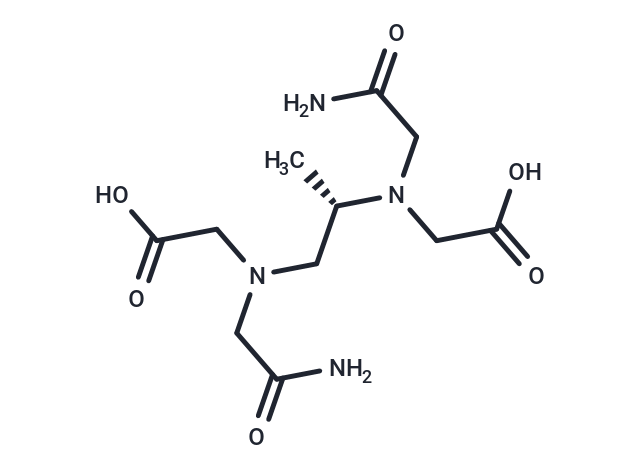
ADR-925
CAS No. 75459-34-6
ADR-925( —— )
Catalog No. M34491 CAS No. 75459-34-6
ADR-925, an active chelated iron metabolite of dexrazoxane, has the ability to protect neonatal rat cardiomyocytes from doxorubicin-induced injury.
Purity : >98% (HPLC)
 COA
Datasheet
HNMR
HPLC
MSDS
Handing Instructions
COA
Datasheet
HNMR
HPLC
MSDS
Handing Instructions
| Size | Price / USD | Stock | Quantity |
| 5MG | 2138 | In Stock |


|
| 10MG | 2822 | In Stock |
|
| 25MG | 4266 | In Stock |
|
| 50MG | 5552 | In Stock |
|
| 100MG | Get Quote | In Stock |
|
| 200MG | Get Quote | In Stock |
|
| 500MG | Get Quote | In Stock |
|
| 1G | Get Quote | In Stock |
|
Biological Information
-
Product NameADR-925
-
NoteResearch use only, not for human use.
-
Brief DescriptionADR-925, an active chelated iron metabolite of dexrazoxane, has the ability to protect neonatal rat cardiomyocytes from doxorubicin-induced injury.
-
DescriptionADR-925, an active chelated iron metabolite of dexrazoxane, has the ability to protect neonatal rat cardiomyocytes from doxorubicin-induced injury.
-
In Vitro——
-
In Vivo——
-
Synonyms——
-
PathwayProteasome/Ubiquitin
-
TargetEndogenous Metabolite
-
RecptorEndogenous Metabolite
-
Research Area——
-
Indication——
Chemical Information
-
CAS Number75459-34-6
-
Formula Weight304.3
-
Molecular FormulaC11H20N4O6
-
Purity>98% (HPLC)
-
Solubility——
-
SMILESN([C@H](CN(CC(N)=O)CC(O)=O)C)(CC(N)=O)CC(O)=O
-
Chemical Name——
Shipping & Storage Information
-
Storage(-20℃)
-
ShippingWith Ice Pack
-
Stability≥ 2 years
Reference
molnova catalog



related products
-
1,4-Cineole
1,4-Cineole is a natural, oxygenated monoterpene. 1,4-Cineole can activate both human TRPM8 and human TRPA1.
-
Alloepipregnanolone
Alloepipregnanolone is a pregnane with anesthetic hypnotic and sedative properties.
-
Tetrahydrofolic acid
Tetrahydrofolic acid (5,6,7,8-tetrahydrofolic acid) is a vitamin B9 derivative that is a common one-carbon donor in organisms and is involved in growth and metabolism.
