


 Cart
Cart
 sales@molnova.com


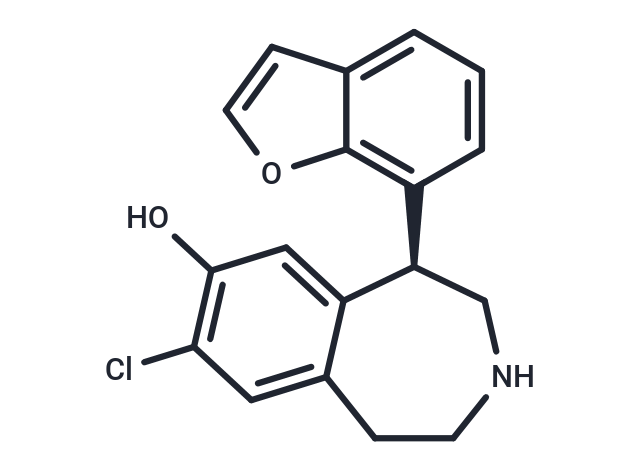
(S)-Desmethyl-NNC112
CAS No. 221132-62-3
(S)-Desmethyl-NNC112( —— )
Catalog No. M34481 CAS No. 221132-62-3
(S)-Desmethyl-NNC112 ((+)-Desmethyl-NNC112) is a selective PET radioligand that binds to D-dopamine receptors.
Purity : >98% (HPLC)
 COA
Datasheet
HNMR
HPLC
MSDS
Handing Instructions
COA
Datasheet
HNMR
HPLC
MSDS
Handing Instructions
| Size | Price / USD | Stock | Quantity |
| 5MG | 686 | In Stock |


|
| 10MG | 938 | In Stock |
|
| 25MG | 1444 | In Stock |
|
| 100MG | Get Quote | In Stock |
|
| 200MG | Get Quote | In Stock |
|
| 500MG | Get Quote | In Stock |
|
| 1G | Get Quote | In Stock |
|
Biological Information
-
Product Name(S)-Desmethyl-NNC112
-
NoteResearch use only, not for human use.
-
Brief Description(S)-Desmethyl-NNC112 ((+)-Desmethyl-NNC112) is a selective PET radioligand that binds to D-dopamine receptors.
-
Description(S)-Desmethyl-NNC112 ((+)-Desmethyl-NNC112) is a selective PET radioligand that binds to D-dopamine receptors.
-
In Vitro——
-
In Vivo——
-
Synonyms——
-
PathwayOthers
-
TargetOther Targets
-
RecptorOthers
-
Research Area——
-
Indication——
Chemical Information
-
CAS Number221132-62-3
-
Formula Weight313.78
-
Molecular FormulaC18H16ClNO2
-
Purity>98% (HPLC)
-
Solubility——
-
SMILESOC=1C=C2[C@H](CNCCC2=CC1Cl)C3=C4C(=CC=C3)C=CO4
-
Chemical Name——
Shipping & Storage Information
-
Storage(-20℃)
-
ShippingWith Ice Pack
-
Stability≥ 2 years
Reference
molnova catalog



related products
-
Isokaempferide
Isokaempferide shows hepatoprotective, antiproliferative, and anti-inflammatory effects, the anti-inflammatory effects can be explained, at least in part, by reducing neutrophil degranulation, myeloperoxidase activity, mediators as well as TNF-alpha secretion.
-
3,7,25-Trihydroxycuc...
3,7,25-Trihydroxycucurbita-5,23-dien-19-al is a natural product for research related to life sciences.
-
H-Tyr-Ile-Gly-Ser-Ar...
H-Tyr-Ile-Gly-Ser-Arg-NH2 is a hexapeptide that is an essential fragment of laminin responsible for efficient cell adhesion and receptor binding. H-Tyr-Ile-Gly-Ser-Arg-NH2 promotes various epithelial cell adhesion activities.
