


 Cart
Cart
 sales@molnova.com


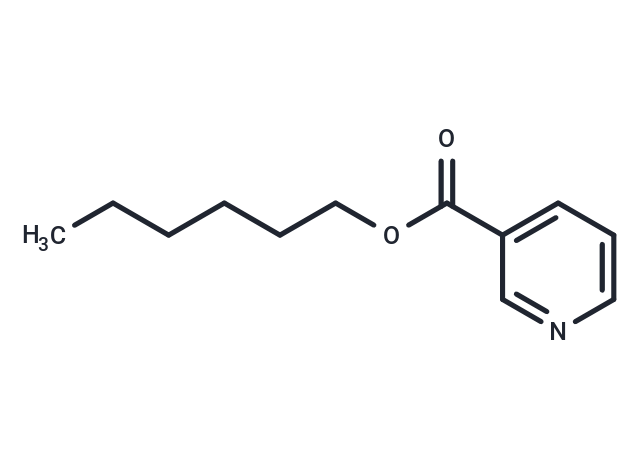
Hexyl nicotinate
CAS No. 23597-82-2
Hexyl nicotinate( —— )
Catalog No. M33671 CAS No. 23597-82-2
Hexyl nicotinate (AI3 15769) is a cutaneous vasodilator and can be used in research on non-immunologic contact urticaria on the scalp, face, and back.
Purity : >98% (HPLC)
 COA
Datasheet
HNMR
HPLC
MSDS
Handing Instructions
COA
Datasheet
HNMR
HPLC
MSDS
Handing Instructions
| Size | Price / USD | Stock | Quantity |
| 100MG | Get Quote | In Stock |


|
| 200MG | Get Quote | In Stock |
|
| 500MG | 38 | In Stock |
|
| 1G | Get Quote | In Stock |
|
Biological Information
-
Product NameHexyl nicotinate
-
NoteResearch use only, not for human use.
-
Brief DescriptionHexyl nicotinate (AI3 15769) is a cutaneous vasodilator and can be used in research on non-immunologic contact urticaria on the scalp, face, and back.
-
DescriptionHexyl nicotinate, a nicotinic acid ester with vasodilatory effect. Hexyl nicotinate improves blood circulation, usually serves as an active ingredient in topical preparations, such as creams and lotions.
-
In Vitro——
-
In Vivo——
-
Synonyms——
-
PathwayOthers
-
TargetOther Targets
-
RecptorOthers
-
Research Area——
-
Indication——
Chemical Information
-
CAS Number23597-82-2
-
Formula Weight207.27
-
Molecular FormulaC12H17NO2
-
Purity>98% (HPLC)
-
SolubilityIn Vitro:?DMSO : 100 mg/mL (482.46 mM; Ultrasonic (<60°C)
-
SMILESCCCCCCOC(=O)c1cccnc1
-
Chemical Name——
Shipping & Storage Information
-
Storage(-20℃)
-
ShippingWith Ice Pack
-
Stability≥ 2 years
Reference
1. Dowd PM, et al. Hexyl-nicotinate-induced vasodilation in normal human skin. Dermatologica. 1987;174(5):239-43.?
molnova catalog



related products
-
GNF-5837
GNF-5837 is a specific, and orally bioavailable pan-TRK inhibitor for TrkA/TrkB (IC50: 8/12 nM).
-
Carmine B
Carmine (Carmine red) is an azo dye derived from dried Dactylopius coccus var. Costa and is an added food coloring.Carmine causes immediate hypersensitivity and delayed systemic reactions.
-
5-O-Methylshanciguol
5-O-Methylshanciguol
