


 Cart
Cart
 sales@molnova.com


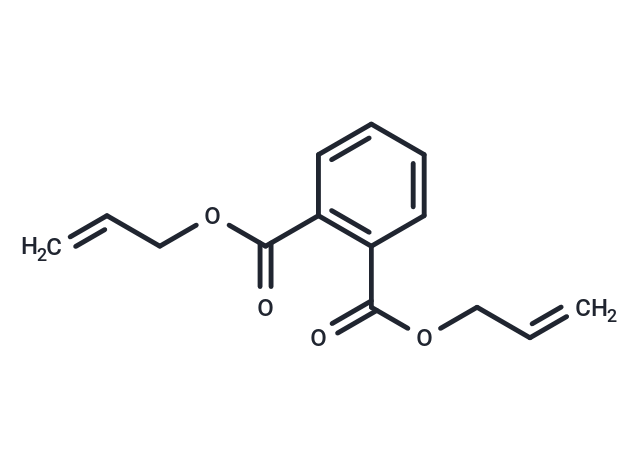
Diallyl phthalate
CAS No. 131-17-9
Diallyl phthalate( —— )
Catalog No. M33665 CAS No. 131-17-9
Diallyl phthalate (NSC 7667) is a widely used cross-linking agent for unsaturated polyesters and can cause fetal toxicity at certain concentrations.
Purity : >98% (HPLC)
 COA
Datasheet
HNMR
HPLC
MSDS
Handing Instructions
COA
Datasheet
HNMR
HPLC
MSDS
Handing Instructions
| Size | Price / USD | Stock | Quantity |
| 100MG | Get Quote | In Stock |


|
| 200MG | Get Quote | In Stock |
|
| 500MG | 28 | In Stock |
|
| 1G | 39 | In Stock |
|
Biological Information
-
Product NameDiallyl phthalate
-
NoteResearch use only, not for human use.
-
Brief DescriptionDiallyl phthalate (NSC 7667) is a widely used cross-linking agent for unsaturated polyesters and can cause fetal toxicity at certain concentrations.
-
DescriptionDiallyl phthalate (NSC 7667) is a widely used cross-linking agent for unsaturated polyesters and can cause fetal toxicity at certain concentrations.
-
In Vitro——
-
In Vivo——
-
Synonyms——
-
PathwayOthers
-
TargetOther Targets
-
RecptorOthers
-
Research Area——
-
Indication——
Chemical Information
-
CAS Number131-17-9
-
Formula Weight246.26
-
Molecular FormulaC14H14O4
-
Purity>98% (HPLC)
-
Solubility——
-
SMILESO=C(OCC=C)C=1C=CC=CC1C(=O)OCC=C
-
Chemical Name——
Shipping & Storage Information
-
Storage(-20℃)
-
ShippingWith Ice Pack
-
Stability≥ 2 years
Reference
molnova catalog



related products
-
PAL-4
PAL-4 stimulates the activity of LYPLAL1, a poorly characterized serine hydrolase with complex genetic links to human metabolic traits.
-
Ganoderic acid GS-2
Ganoderic acid GS-2 can inhibit the activity of human immunodeficiency virus -1 protease.
-
Polybia-MP1
Polybia-MP1 is an antimicrobial mastoparan peptide.
