


 Cart
Cart
 sales@molnova.com


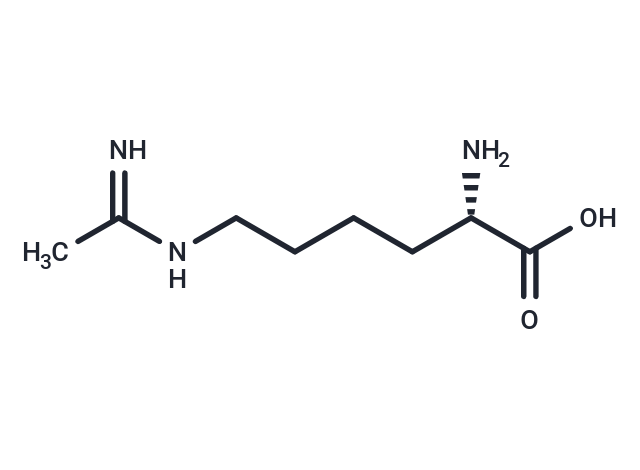
L-NIL
CAS No. 53774-63-3
L-NIL( —— )
Catalog No. M32991 CAS No. 53774-63-3
L-NIL is a selective nitric oxide synthase (iNOS) inhibitor that reverses burn-induced activation of glycogen synthase kinase-3β in rat skeletal muscle and may slow the progression of squamous cell carcinoma lung.
Purity : >98% (HPLC)
 COA
Datasheet
HNMR
HPLC
MSDS
Handing Instructions
COA
Datasheet
HNMR
HPLC
MSDS
Handing Instructions
| Size | Price / USD | Stock | Quantity |
| 5MG | 28 | In Stock |


|
| 100MG | Get Quote | In Stock |
|
| 200MG | Get Quote | In Stock |
|
| 500MG | Get Quote | In Stock |
|
| 1G | Get Quote | In Stock |
|
Biological Information
-
Product NameL-NIL
-
NoteResearch use only, not for human use.
-
Brief DescriptionL-NIL is a selective nitric oxide synthase (iNOS) inhibitor that reverses burn-induced activation of glycogen synthase kinase-3β in rat skeletal muscle and may slow the progression of squamous cell carcinoma lung.
-
DescriptionL-NIL is an inducible NO synthase inhibitor, with an IC50 of 3.3 μM for miNOS.
-
In Vitro——
-
In VivoAnimal Model:Adult male Balb/c (20-25 g).Dosage:10 and 30?mg/kg.Administration:Intraperitoneally at the end of CLP and at 6?h after sepsis induction. Result:Led to a negligible increase in plasma NGAL compared to sham mice.Led to a significant decrease in both TLR4 and IL1β protein contents and clusterin transcript.Showed an increase in NFAT5 mRNA levels, as compared with mice treated with vehicle.Promoted a decrease in AR protein expression, as compared with animals treated with vehicle.
-
Synonyms——
-
PathwayImmunology/Inflammation
-
TargetNOS
-
RecptorNOS
-
Research Area——
-
Indication——
Chemical Information
-
CAS Number53774-63-3
-
Formula Weight187.24
-
Molecular FormulaC8H17N3O2
-
Purity>98% (HPLC)
-
SolubilityIn Vitro:?H2O : 50 mg/mL (267.04 mM; Ultrasonic) DMSO : 1 mg/mL (5.34 mM; Ultrasonic )
-
SMILESCC(=N)NCCCC[C@H](N)C(O)=O
-
Chemical Name——
Shipping & Storage Information
-
Storage(-20℃)
-
ShippingWith Ice Pack
-
Stability≥ 2 years
Reference
1. Consuelo Pasten, et al. l-NIL prevents the ischemia and reperfusion injury involving TLR-4, GST, clusterin, and NFAT-5 in mice. Am J Physiol Renal Physiol. 2019 Apr 1;316(4):F624-F634.?
molnova catalog



related products
-
EIT hydrobromide
EIT hydrobromide is an iNOS inhibitor.
-
Tsugaric acid A
Tsugaric acid A can significantly inhibit superoxide anion formation in fMLP/CB-stimulated rat neutrophils it is also able to protect human keratinocytes against damage induced by ultraviolet B (UV B) light indicates that tsugaric acid A can protect keratinocytes from photodamage.
-
TP508
TP508 is a 23 amino acid synthetic peptide representing residues 508-530 of human prothrombin which is identified as a potential receptor-binding domain based on competition for high-affinity thrombin binding to fibroblasts.TP508 (Chrysalin) is an investigational peptide drug that was developed for use in stimulating repair of dermal and musculoskeletal tissues.
