


 Cart
Cart
 sales@molnova.com


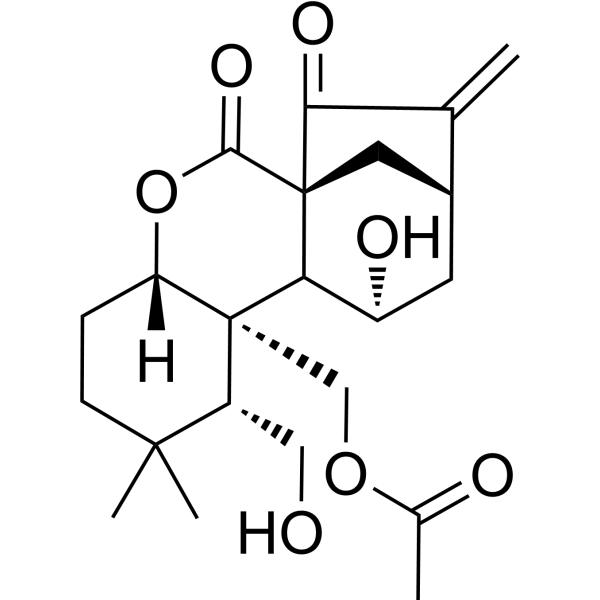
Rabdophyllin G
CAS No. 82460-75-1
Rabdophyllin G( —— )
Catalog No. M32669 CAS No. 82460-75-1
Rabdosin C is an antineoplastic isolated from the leaves of Rabdosia japonic.
Purity : >98% (HPLC)
 COA
Datasheet
HNMR
HPLC
MSDS
Handing Instructions
COA
Datasheet
HNMR
HPLC
MSDS
Handing Instructions
| Size | Price / USD | Stock | Quantity |
| 5MG | 873 | In Stock |


|
| 50MG | Get Quote | In Stock |
|
| 100MG | Get Quote | In Stock |
|
| 200MG | Get Quote | In Stock |
|
| 500MG | Get Quote | In Stock |
|
| 1G | Get Quote | In Stock |
|
Biological Information
-
Product NameRabdophyllin G
-
NoteResearch use only, not for human use.
-
Brief DescriptionRabdosin C is an antineoplastic isolated from the leaves of Rabdosia japonic.
-
DescriptionRabdosin C is an antineoplastic isolated from the leaves of Rabdosia japonic.
-
In Vitro——
-
In Vivo——
-
Synonyms——
-
PathwayOthers
-
TargetOther Targets
-
Recptor——
-
Research Area——
-
Indication——
Chemical Information
-
CAS Number82460-75-1
-
Formula Weight406.5
-
Molecular FormulaC22H30O7
-
Purity>98% (HPLC)
-
Solubility——
-
SMILES——
-
Chemical Name——
Shipping & Storage Information
-
Storage(-20℃)
-
ShippingWith Ice Pack
-
Stability≥ 2 years
Reference
molnova catalog



related products
-
IR-783
IR 783 is a heptamethine cyanine fluorescent probe for in vivo imaging of tumor cells.
-
Acetyl Dopamine Dime...
N-Acetyldopamine dimer-1 is a 2-(3',4'-dihydroxyphenyl)-1,4-benzodioxane derivative. N-Acetyldopamine dimer-1 is optically active, can be isolated from crude agent "Zentai," a cast-off shell of the cicada of Cryptotympana sp. (Cicadidae).
-
Cannabidiol hydroxyq...
Cannabidiol hydroxyquinone(HU-331) might be an active metabolite of cannabidiol potentially contributing to the induction of apoptosis.
