


 Cart
Cart
 sales@molnova.com


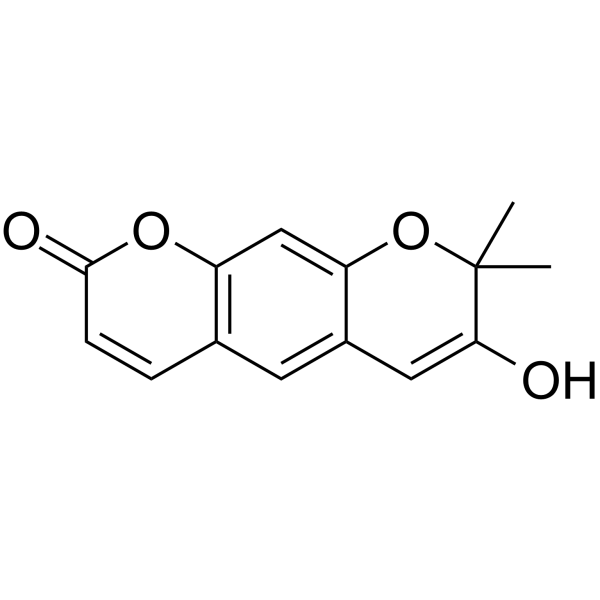
3-Hydroxyxanthyletin
CAS No. 165900-08-3
3-Hydroxyxanthyletin( —— )
Catalog No. M32286 CAS No. 165900-08-3
3'-Hydroxyxanthyletin showed antimycobacterial activities against Mycobacterium tuberculosis H(37)R(V) in vitro with MIC values of 16 microg/ml.
Purity : >98% (HPLC)
 COA
Datasheet
HNMR
HPLC
MSDS
Handing Instructions
COA
Datasheet
HNMR
HPLC
MSDS
Handing Instructions
| Size | Price / USD | Stock | Quantity |
| 5MG | 551 | In Stock |


|
| 50MG | Get Quote | In Stock |
|
| 100MG | Get Quote | In Stock |
|
| 200MG | Get Quote | In Stock |
|
| 500MG | Get Quote | In Stock |
|
| 1G | Get Quote | In Stock |
|
Biological Information
-
Product Name3-Hydroxyxanthyletin
-
NoteResearch use only, not for human use.
-
Brief Description3'-Hydroxyxanthyletin showed antimycobacterial activities against Mycobacterium tuberculosis H(37)R(V) in vitro with MIC values of 16 microg/ml.
-
Description3'-Hydroxyxanthyletin showed antimycobacterial activities against Mycobacterium tuberculosis H(37)R(V) in vitro with MIC values of 16 microg/ml.
-
In Vitro3'-Hydroxyxanthyletin against Mycobacterium tuberculosis H37RV in vitro with a MIC value of 16 μg/mL.
-
In Vivo——
-
Synonyms——
-
PathwayOthers
-
TargetOther Targets
-
Recptor——
-
Research Area——
-
Indication——
Chemical Information
-
CAS Number165900-08-3
-
Formula Weight244.2
-
Molecular FormulaC14H12O4
-
Purity>98% (HPLC)
-
SolubilityDMSO, Pyridine, Methanol, Ethanol, etc.
-
SMILES——
-
Chemical Name——
Shipping & Storage Information
-
Storage(-20℃)
-
ShippingWith Ice Pack
-
Stability≥ 2 years
Reference
1.Chem Biodivers . 2010 Jul;7(7):1814-21
molnova catalog



related products
-
2-Methoxynaphthalene
Used as Odor agents.
-
Thymocartin
Thymocartin (RGH 0206) is a fragment 32-35 of the naturally occurring thymic factor (thymopoietin).Thymocartin is used in the study of immunodeficiency diseases.
-
Ethyl benzoate
Ethyl benzoate is a natural product for research related to life sciences.
