


 Cart
Cart
 sales@molnova.com


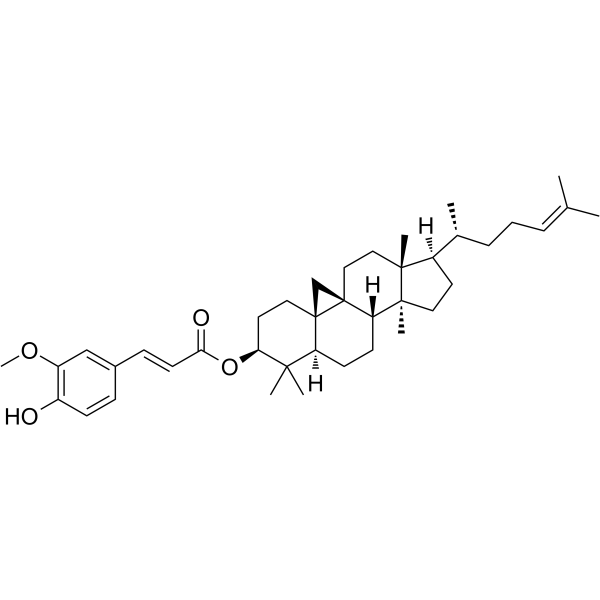
Cycloartenyl ferulate
CAS No. 21238-33-5
Cycloartenyl ferulate( —— )
Catalog No. M32245 CAS No. 21238-33-5
Cycloartenyl ferulate (also known as cycloartenol ferulate) is a representative triterpene alcohol with diverse biological properties, such as antioxidant, anti-allergic, anti-inflammatory, and anticancer activities.
Purity : >98% (HPLC)
 COA
Datasheet
HNMR
HPLC
MSDS
Handing Instructions
COA
Datasheet
HNMR
HPLC
MSDS
Handing Instructions
| Size | Price / USD | Stock | Quantity |
| 5MG | 419 | In Stock |


|
| 50MG | Get Quote | In Stock |
|
| 100MG | Get Quote | In Stock |
|
| 200MG | Get Quote | In Stock |
|
| 500MG | Get Quote | In Stock |
|
| 1G | Get Quote | In Stock |
|
Biological Information
-
Product NameCycloartenyl ferulate
-
NoteResearch use only, not for human use.
-
Brief DescriptionCycloartenyl ferulate (also known as cycloartenol ferulate) is a representative triterpene alcohol with diverse biological properties, such as antioxidant, anti-allergic, anti-inflammatory, and anticancer activities.
-
DescriptionCycloartenyl ferulate (also known as cycloartenol ferulate) is a representative triterpene alcohol with diverse biological properties, such as antioxidant, anti-allergic, anti-inflammatory, and anticancer activities.
-
In Vitro——
-
In Vivo——
-
Synonyms——
-
PathwayOthers
-
TargetOther Targets
-
Recptor——
-
Research Area——
-
Indication——
Chemical Information
-
CAS Number21238-33-5
-
Formula Weight602.89
-
Molecular FormulaC40H58O4
-
Purity>98% (HPLC)
-
Solubility——
-
SMILES——
-
Chemical Name——
Shipping & Storage Information
-
Storage(-20℃)
-
ShippingWith Ice Pack
-
Stability≥ 2 years
Reference
molnova catalog



related products
-
Trimetozine
Trimetozine is a sedative that has been marketed in Europe since 1959. It also has mild tranquilizing effects and has been used in the treatment of anxiety.
-
α-Galactosylceramide
α-Galactosylceramide is a synthetic glycolipid with antitumorial and immunostimulatory and is a very potent NKT cell agonist and binds effectively to CD1d. The complex of α-Galactosylceramide and CD1d can bind to the T cell antigen receptor of NKT cells.
-
RSK Substrate, S6 (2...
RSK Substrate, S6 (231-239)
