


 Cart
 sales@molnova.com


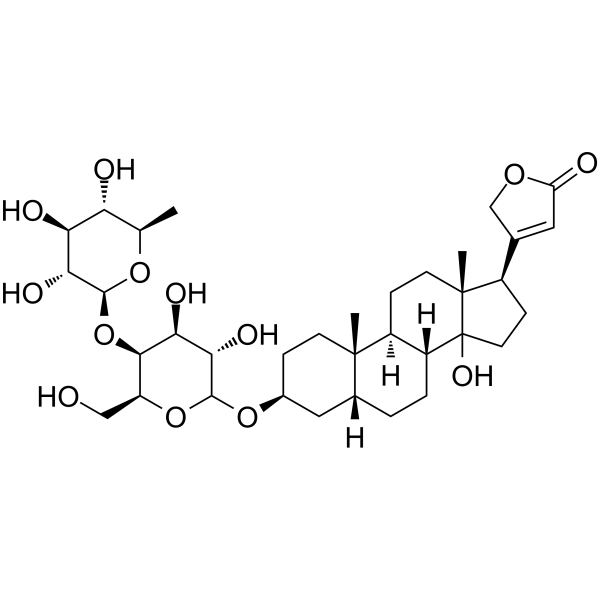
Glucodigifucoside
CAS No. 2446-63-1
Glucodigifucoside( —— )
Catalog No. M32242 CAS No. 2446-63-1
Glucodigifucoside, a cardiac glycoside that can be isolated from digitalis seeds, is specifically cytotoxic to human renal adenocarcinoma cells.
Purity : >98% (HPLC)
 COA
Datasheet
HNMR
HPLC
MSDS
Handing Instructions
| Size | Price / USD | Stock | Quantity |
| 5MG | 238 | In Stock |


|
| 10MG | 354 | In Stock |
|
| 100MG | Get Quote | In Stock |
|
| 200MG | Get Quote | In Stock |
|
| 500MG | Get Quote | In Stock |
|
| 1G | Get Quote | In Stock |
|
Biological Information
-
Product NameGlucodigifucoside
-
NoteResearch use only, not for human use.
-
Brief DescriptionGlucodigifucoside, a cardiac glycoside that can be isolated from digitalis seeds, is specifically cytotoxic to human renal adenocarcinoma cells.
-
DescriptionGlucodigifucoside, a cardiac glycoside that can be isolated from digitalis seeds, is specifically cytotoxic to human renal adenocarcinoma cells.
-
In Vitro——
-
In Vivo——
-
Synonyms——
-
PathwayOthers
-
TargetOther Targets
-
Recptor——
-
Research Area——
-
Indication——
Chemical Information
-
CAS Number2446-63-1
-
Formula Weight682.8
-
Molecular FormulaC35H54O13
-
Purity>98% (HPLC)
-
Solubility——
-
SMILES——
-
Chemical Name——
Shipping & Storage Information
-
Storage(-20℃)
-
ShippingWith Ice Pack
-
Stability≥ 2 years
Reference
molnova catalog



related products
-
3,5-Di-O-caffeoylqui...
3,5-Di-O-caffeoylquinic acid methyl ester exhibits potent inhibitory activities against the formation of advanced glycation end products (AGEs); it exhibits cytotoxicity actions against human cervix carcinoma HeLa cells. 3,5-Di-O-caffeoylquinic acid methyl ester shows high efficiency and low toxicity with antivirus activity against RSV.
-
Galangin
Galangin is an agonist/antagonist of the arylhydrocarbon receptor, and also shows inhibition of CYP1A1 activity.
-
Kobophenol A
Kobophenol A has antimicrobial, and anti-inflammatory activities, it might be a candidate for treatment of inflammatory bone diseases relevant to osteoblast cell death.
