


 Cart
Cart
 sales@molnova.com


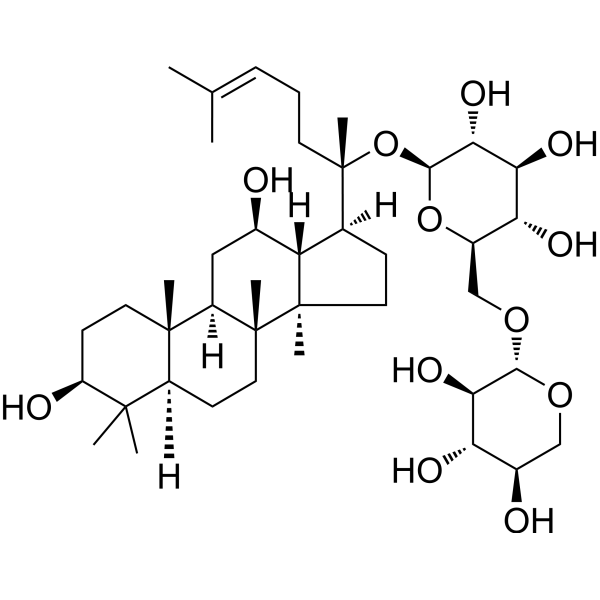
Gypenoside XIII
CAS No. 80325-22-0
Gypenoside XIII( —— )
Catalog No. M32141 CAS No. 80325-22-0
Gypenoside XIII is belonging to the gypenosides. Gypenosides, extracted from Gynostemma pentaphyllum, protect against cardiovascular diseases, especially atherosclerosis.
Purity : >98% (HPLC)
 COA
Datasheet
HNMR
HPLC
MSDS
Handing Instructions
COA
Datasheet
HNMR
HPLC
MSDS
Handing Instructions
| Size | Price / USD | Stock | Quantity |
| 1 mL x 10 mM in DMSO | 172 | In Stock |


|
| 5MG | 104 | In Stock |
|
| 10MG | 181 | In Stock |
|
| 100MG | Get Quote | In Stock |
|
| 200MG | Get Quote | In Stock |
|
| 500MG | Get Quote | In Stock |
|
| 1G | Get Quote | In Stock |
|
Biological Information
-
Product NameGypenoside XIII
-
NoteResearch use only, not for human use.
-
Brief DescriptionGypenoside XIII is belonging to the gypenosides. Gypenosides, extracted from Gynostemma pentaphyllum, protect against cardiovascular diseases, especially atherosclerosis.
-
DescriptionGypenoside XIII is belonging to the gypenosides. Gypenosides, extracted from Gynostemma pentaphyllum, protect against cardiovascular diseases, especially atherosclerosis.
-
In Vitro——
-
In Vivo——
-
Synonyms——
-
PathwayOthers
-
TargetOther Targets
-
Recptor——
-
Research Area——
-
Indication——
Chemical Information
-
CAS Number80325-22-0
-
Formula Weight755
-
Molecular FormulaC41H70O12
-
Purity>98% (HPLC)
-
Solubility——
-
SMILES——
-
Chemical Name——
Shipping & Storage Information
-
Storage(-20℃)
-
ShippingWith Ice Pack
-
Stability≥ 2 years
Reference
molnova catalog



related products
-
gp100 (476-485)
gp100 (476-485)
-
Ganoderic acid GS-1
Ganoderic acid GS-1, a highly oxygenated lanostane-type triterpenoid, has anti-HIV-1 protease activities with an IC 50 of 58 μM.
-
Tax8, HTLV - 1 (12 -...
Tax8, HTLV - 1 (12 - 19)
