


 Cart
Cart
 sales@molnova.com


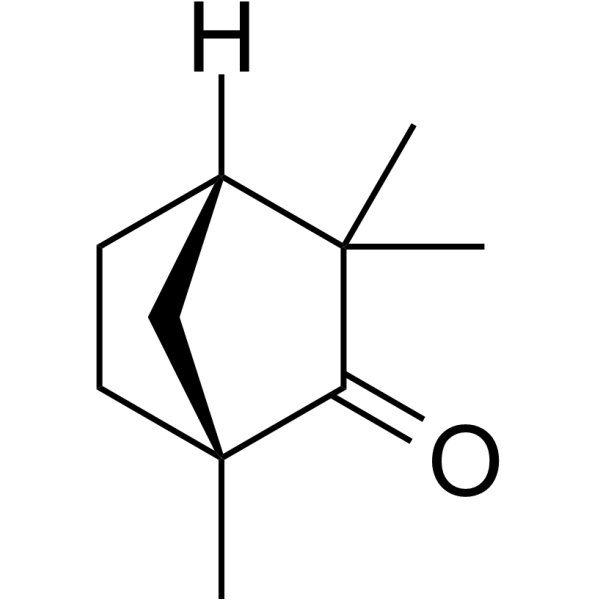
(-)-Fenchone
CAS No. 7787-20-4
(-)-Fenchone( —— )
Catalog No. M32047 CAS No. 7787-20-4
(-)-Fenchone is a bicyclic monoterpenoid widely distributed in plants and can be extracted from Foeniculum vulgare and Peumus boldus.
Purity : >98% (HPLC)
 COA
Datasheet
HNMR
HPLC
MSDS
Handing Instructions
COA
Datasheet
HNMR
HPLC
MSDS
Handing Instructions
| Size | Price / USD | Stock | Quantity |
| 1 mL x 10 mM in DMSO | 28 | In Stock |


|
| 50MG | Get Quote | In Stock |
|
| 100MG | Get Quote | In Stock |
|
| 200MG | Get Quote | In Stock |
|
| 500MG | Get Quote | In Stock |
|
| 1G | Get Quote | In Stock |
|
Biological Information
-
Product Name(-)-Fenchone
-
NoteResearch use only, not for human use.
-
Brief Description(-)-Fenchone is a bicyclic monoterpenoid widely distributed in plants and can be extracted from Foeniculum vulgare and Peumus boldus.
-
Description(-)-Fenchone is a bicyclic monoterpenoid widely distributed in plants and can be extracted from Foeniculum vulgare and Peumus boldus. (-)-Fenchone has a wide range of biological activities including antioxidant, wound healing, antidiarrheal, antifungal, anti-injury sensory and bronchodilator activities. (-)-Fenchone is a potential anti-tumor compound.
-
In Vitro——
-
In Vivo——
-
Synonyms——
-
PathwayOthers
-
TargetOther Targets
-
Recptor——
-
Research Area——
-
Indication——
Chemical Information
-
CAS Number7787-20-4
-
Formula Weight152.2
-
Molecular FormulaC10H16O
-
Purity>98% (HPLC)
-
SolubilityIn Vitro:?DMSO : 100 mg/mL (656.90 mM)
-
SMILES——
-
Chemical Name——
Shipping & Storage Information
-
Storage(-20℃)
-
ShippingWith Ice Pack
-
Stability≥ 2 years
Reference
molnova catalog



related products
-
Evonine
Evonine shows insecticidal activity against Mythimna separata, the LC50 value of 23.23 mg /mL.
-
CCG-63808
CCG-63808 is a reversible inhibitor of regulator of G-protein signaling (RGS) proteins.
-
Dehydro Nifedipine
Dehydro Nifedipine (BAY-b 4759) is the main metabolite of nifedipine in human plasma.
