


 Cart
Cart
 sales@molnova.com


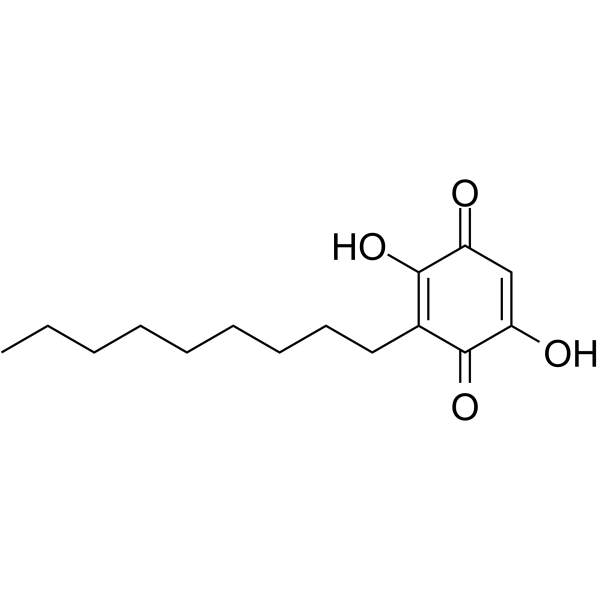
Homoembelin
CAS No. 38363-99-4
Homoembelin( —— )
Catalog No. M32027 CAS No. 38363-99-4
Homoembelin, a pigment from E. ribes and C. monocarpus, is an antibacterial compound that has the potential to study multidrug-resistant bacterial infections.
Purity : >98% (HPLC)
 COA
Datasheet
HNMR
HPLC
MSDS
Handing Instructions
COA
Datasheet
HNMR
HPLC
MSDS
Handing Instructions
| Size | Price / USD | Stock | Quantity |
| 1 mL x 10 mM in DMSO | 371 | In Stock |


|
| 5MG | 350 | In Stock |
|
| 10MG | 523 | In Stock |
|
| 100MG | Get Quote | In Stock |
|
| 200MG | Get Quote | In Stock |
|
| 500MG | Get Quote | In Stock |
|
| 1G | Get Quote | In Stock |
|
Biological Information
-
Product NameHomoembelin
-
NoteResearch use only, not for human use.
-
Brief DescriptionHomoembelin, a pigment from E. ribes and C. monocarpus, is an antibacterial compound that has the potential to study multidrug-resistant bacterial infections.
-
DescriptionHomoembelin, a pigment from E. ribes and C. monocarpus, is an antibacterial compound that has the potential to study multidrug-resistant bacterial infections.
-
In Vitro——
-
In Vivo——
-
Synonyms——
-
PathwayOthers
-
TargetOther Targets
-
Recptor——
-
Research Area——
-
Indication——
Chemical Information
-
CAS Number38363-99-4
-
Formula Weight266.3
-
Molecular FormulaC15H22O4
-
Purity>98% (HPLC)
-
Solubility——
-
SMILES——
-
Chemical Name——
Shipping & Storage Information
-
Storage(-20℃)
-
ShippingWith Ice Pack
-
Stability≥ 2 years
Reference
molnova catalog



related products
-
(2R)-6-methylhept-5-...
(2R)-6-methylhept-5-en-2-ol ((R)-6-Methylhept-5-en-2-ol) is a pheromone component of Cerambycid beetles in the Lamiinae subfamily.
-
Turtle Polypeptide I
Turtle Polypeptide I
-
Terpin Monohydrate
Terpin hydrate is an expectorant, commonly used to loosen mucus in patients presenting with acute or chronic bronchitis, and related conditions.
