


 Cart
Cart
 sales@molnova.com


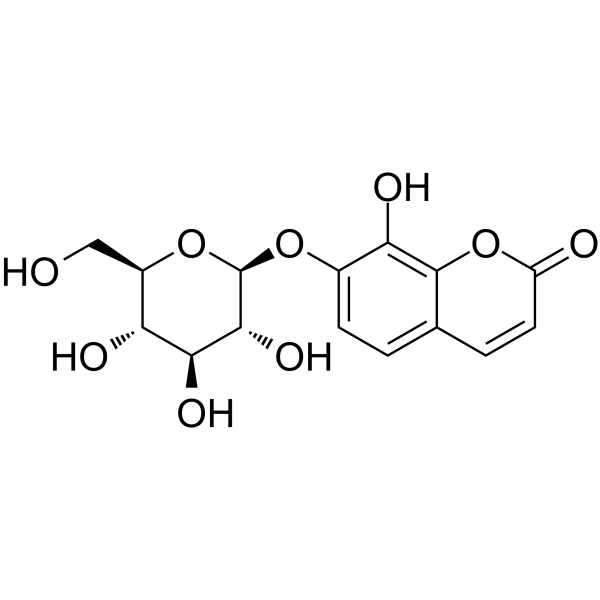
Daphnin
CAS No. 486-55-5
Daphnin( —— )
Catalog No. M31989 CAS No. 486-55-5
Daphnin is one of the main coumarin bioactive ingredients with antibacterial activity. Daphnine is isolated from the entire Daphne fragrance, which is a folk medicine used in China to relieve fever.
Purity : >98% (HPLC)
 COA
Datasheet
HNMR
HPLC
MSDS
Handing Instructions
COA
Datasheet
HNMR
HPLC
MSDS
Handing Instructions
| Size | Price / USD | Stock | Quantity |
| 5MG | 432 | In Stock |


|
| 10MG | 655 | In Stock |
|
| 25MG | 1017 | In Stock |
|
| 50MG | 1330 | In Stock |
|
| 100MG | Get Quote | In Stock |
|
| 200MG | Get Quote | In Stock |
|
| 500MG | Get Quote | In Stock |
|
| 1G | Get Quote | In Stock |
|
Biological Information
-
Product NameDaphnin
-
NoteResearch use only, not for human use.
-
Brief DescriptionDaphnin is one of the main coumarin bioactive ingredients with antibacterial activity. Daphnine is isolated from the entire Daphne fragrance, which is a folk medicine used in China to relieve fever.
-
DescriptionDaphnin is one of the main coumarin bioactive ingredients with antibacterial activity. Daphnine is isolated from the entire Daphne fragrance, which is a folk medicine used in China to relieve fever.
-
In Vitro——
-
In Vivo——
-
Synonyms——
-
PathwayOthers
-
TargetOther Targets
-
Recptor——
-
Research Area——
-
Indication——
Chemical Information
-
CAS Number486-55-5
-
Formula Weight340.3
-
Molecular FormulaC15H16O9
-
Purity>98% (HPLC)
-
SolubilityIn Vitro:?DMSO : 33.33 mg/mL (97.95 mM)
-
SMILES——
-
Chemical Name——
Shipping & Storage Information
-
Storage(-20℃)
-
ShippingWith Ice Pack
-
Stability≥ 2 years
Reference
molnova catalog



related products
-
Gingerglycolipid A
Gingerglycolipid A is a monoacyldigalactosyl glycerol.
-
[Sar1,Ile4,8]-Angiot...
(Sar1,Ile4,8)-Angiotensin II is a functionally selective angiotensin II type 1 receptor (AT1R) agonist. (Sar1,Ile4,8)-Angiotensin II potentiates insulin-stimulated insulin receptor (IR) signaling and glycogen synthesis. (Sar1,Ile4,8)-Angiotensin II potentiates insulin-stimulated phosphorylation of Akt and GSK3α/β.
-
[Asp5,6,Me-Phe8] Sub...
[Asp5,6,Me-Phe8] Substance P
