


 Cart
Cart
 sales@molnova.com


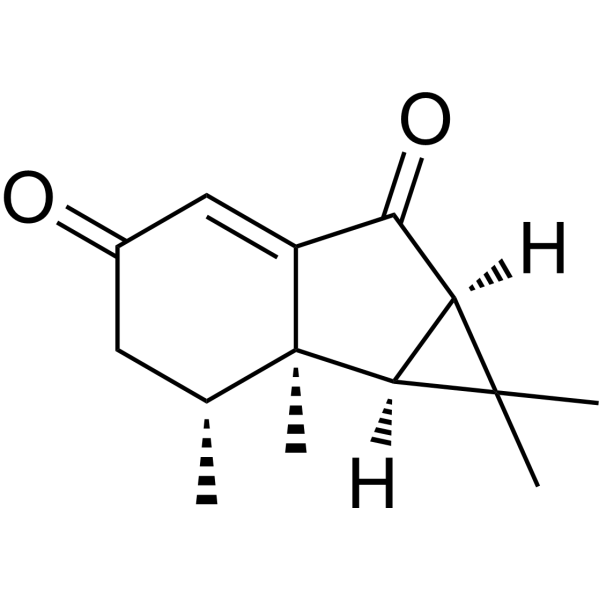
Nardoaristolone B
CAS No. 1422517-82-5
Nardoaristolone B( —— )
Catalog No. M31970 CAS No. 1422517-82-5
Nardoaristolone B, a nor-sesquiterpenoid with an unusual fused ring system and having protective effects on the injury of neonatal rat cardiomyocytes.
Purity : >98% (HPLC)
 COA
Datasheet
HNMR
HPLC
MSDS
Handing Instructions
COA
Datasheet
HNMR
HPLC
MSDS
Handing Instructions
| Size | Price / USD | Stock | Quantity |
| 5MG | 567 | In Stock |


|
| 50MG | Get Quote | In Stock |
|
| 100MG | Get Quote | In Stock |
|
| 200MG | Get Quote | In Stock |
|
| 500MG | Get Quote | In Stock |
|
| 1G | Get Quote | In Stock |
|
Biological Information
-
Product NameNardoaristolone B
-
NoteResearch use only, not for human use.
-
Brief DescriptionNardoaristolone B, a nor-sesquiterpenoid with an unusual fused ring system and having protective effects on the injury of neonatal rat cardiomyocytes.
-
DescriptionNardoaristolone B, a nor-sesquiterpenoid with an unusual fused ring system and having protective effects on the injury of neonatal rat cardiomyocytes. The novel mosquito-repellentsynthetic hydrindanesbased on noreremophilanes and nardoaristolone B which show increasedactivity against adult females of Aedes aegypti.
-
In Vitro——
-
In Vivo——
-
Synonyms——
-
PathwayOthers
-
TargetOther Targets
-
Recptor——
-
Research Area——
-
Indication——
Chemical Information
-
CAS Number1422517-82-5
-
Formula Weight218.3
-
Molecular FormulaC14H18O2
-
Purity>98% (HPLC)
-
Solubility——
-
SMILES——
-
Chemical Name——
Shipping & Storage Information
-
Storage(-20℃)
-
ShippingWith Ice Pack
-
Stability≥ 2 years
Reference
molnova catalog



related products
-
Itepekimab
Itepekimab (REGN-3500) is a potent monoclonal antibody against IL-33.Itepekimab reduces airway inflammation and associated tissue damage in in vivo experiments and can be used to study asthma.
-
Dansylamide
Dansyl amide is a fluorescent dye used in biochemistry and chemistry to label substances with the fluorescent dansyl group.
-
Noreugenin
Noreugenin is a new chromone from Hymenocallis littoralis Salisb.?
