


 Cart
 sales@molnova.com


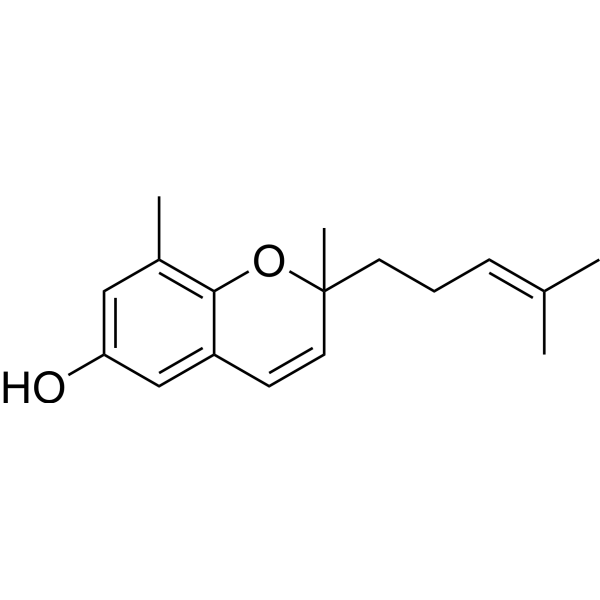
Atractylochromene
CAS No. 203443-33-8
Atractylochromene( —— )
Catalog No. M31911 CAS No. 203443-33-8
Atractylochromene is an inhibitor of β-catenin dependent Wnt pathway, it may be a potential chemotherapeutic agent for the prevention and treatment of human colon cancer.
Purity : >98% (HPLC)
 COA
Datasheet
HNMR
HPLC
MSDS
Handing Instructions
| Size | Price / USD | Stock | Quantity |
| 10MG | 630 | In Stock |


|
| 50MG | Get Quote | In Stock |
|
| 100MG | Get Quote | In Stock |
|
| 200MG | Get Quote | In Stock |
|
| 500MG | Get Quote | In Stock |
|
| 1G | Get Quote | In Stock |
|
Biological Information
-
Product NameAtractylochromene
-
NoteResearch use only, not for human use.
-
Brief DescriptionAtractylochromene is an inhibitor of β-catenin dependent Wnt pathway, it may be a potential chemotherapeutic agent for the prevention and treatment of human colon cancer.
-
DescriptionAtractylochromene is an inhibitor of β-catenin dependent Wnt pathway, it may be a potential chemotherapeutic agent for the prevention and treatment of human colon cancer.
-
In Vitro——
-
In Vivo——
-
Synonyms——
-
PathwayOthers
-
TargetOther Targets
-
Recptor——
-
Research Area——
-
Indication——
Chemical Information
-
CAS Number203443-33-8
-
Formula Weight258.4
-
Molecular FormulaC17H22O2
-
Purity>98% (HPLC)
-
Solubility——
-
SMILES——
-
Chemical Name——
Shipping & Storage Information
-
Storage(-20℃)
-
ShippingWith Ice Pack
-
Stability≥ 2 years
Reference
molnova catalog



related products
-
Tyr-CRF (ovine)
[Tyr0] Corticotropin Releasing Factor, ovine is a corticotropin releasing factor/hormone isolated from ovine. Corticotropin releasing factor (CRF) is a hypothalamic hormone, stimulates the release of adrenocorticotropic hormone (ACTH) and of β-endorphin.
-
1M6
1M6 (1-Methyl-6-nitroisatoic anhydride) is a SHAPE reagent for the detection of RNA chemical structures.
-
Ensaculin
Ensaculin (Anseculin), a novel benzopyrone partially substituted with piperazine, showed memory-enhancing effects in passive and conditioned avoidance paradigms in normal and artificially amnesic rodents.
