


 Cart
Cart
 sales@molnova.com


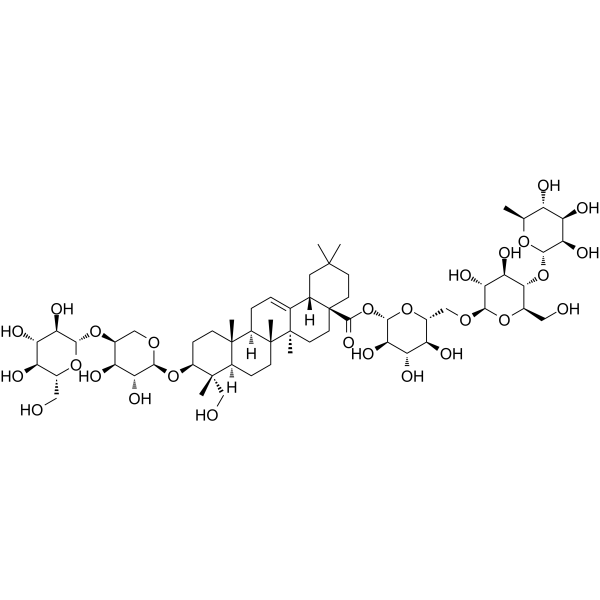
Leonloside D
CAS No. 20830-84-6
Leonloside D( —— )
Catalog No. M31784 CAS No. 20830-84-6
Leonloside D is a natural product.
Purity : >98% (HPLC)
 COA
Datasheet
HNMR
HPLC
MSDS
Handing Instructions
COA
Datasheet
HNMR
HPLC
MSDS
Handing Instructions
| Size | Price / USD | Stock | Quantity |
| 5MG | 360 | In Stock |


|
| 50MG | Get Quote | In Stock |
|
| 100MG | Get Quote | In Stock |
|
| 200MG | Get Quote | In Stock |
|
| 500MG | Get Quote | In Stock |
|
| 1G | Get Quote | In Stock |
|
Biological Information
-
Product NameLeonloside D
-
NoteResearch use only, not for human use.
-
Brief DescriptionLeonloside D is a natural product.
-
DescriptionLeonloside D is a natural product.
-
In Vitro——
-
In Vivo——
-
Synonyms——
-
PathwayOthers
-
TargetOther Targets
-
Recptor——
-
Research Area——
-
Indication——
Chemical Information
-
CAS Number20830-84-6
-
Formula Weight1237.39
-
Molecular FormulaC59H96O27
-
Purity>98% (HPLC)
-
Solubility——
-
SMILES——
-
Chemical Name——
Shipping & Storage Information
-
Storage(-20℃)
-
ShippingWith Ice Pack
-
Stability≥ 2 years
Reference
molnova catalog



related products
-
Epigallocatechin Gal...
Epigallocatechol Gallate(EGCG) is an antioxidant polyphenol flavonoid that inhibits telomerase and Dna methyltransferase.
-
Euchrestaflavanone B
Euchrestaflavanone B shows antibacterial activity against Gram positive bacteria, Staphylococcus aureus, Bacillus subtilis and Bacillus cereus. Euchrestaflavanone B may function by inhibiting oncogenic disease, at least in part, through the inhibition of protein kinase CKII activity.
-
SP-13786
SP-13786 is an inhibitor of fibroblast activation protein (FAP) (IC50 : 3.2 nM); also inhibits prolyl oligopeptidase (PREP) ( IC50 : 1.8 μM).
