


 Cart
Cart
 sales@molnova.com


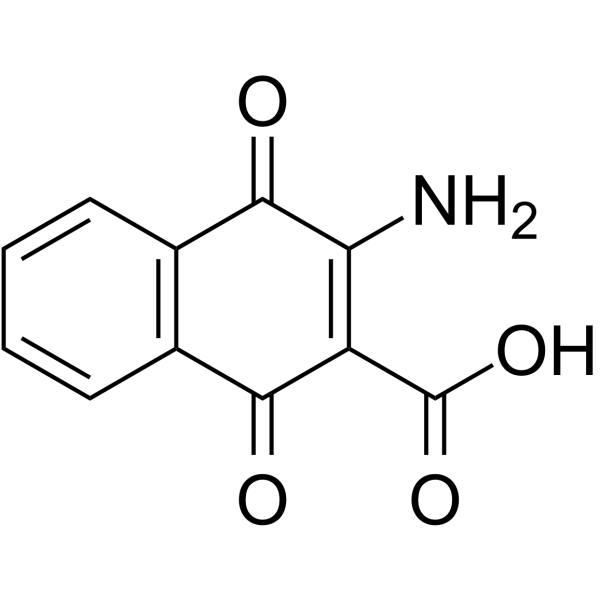
2-Amino-3-carboxy-1,4-naphthoquinone
CAS No. 173043-38-4
2-Amino-3-carboxy-1,4-naphthoquinone( —— )
Catalog No. M31781 CAS No. 173043-38-4
2-Amino-3-carboxy-1,4-naphthoquinone is the electron transfer mediator, can change glucose metabolism of the homofermentative lactic acid bacteria.
Purity : >98% (HPLC)
 COA
Datasheet
HNMR
HPLC
MSDS
Handing Instructions
COA
Datasheet
HNMR
HPLC
MSDS
Handing Instructions
| Size | Price / USD | Stock | Quantity |
| 5MG | 627 | In Stock |


|
| 50MG | Get Quote | In Stock |
|
| 100MG | Get Quote | In Stock |
|
| 200MG | Get Quote | In Stock |
|
| 500MG | Get Quote | In Stock |
|
| 1G | Get Quote | In Stock |
|
Biological Information
-
Product Name2-Amino-3-carboxy-1,4-naphthoquinone
-
NoteResearch use only, not for human use.
-
Brief Description2-Amino-3-carboxy-1,4-naphthoquinone is the electron transfer mediator, can change glucose metabolism of the homofermentative lactic acid bacteria.
-
Description2-Amino-3-carboxy-1,4-naphthoquinone is the electron transfer mediator, can change glucose metabolism of the homofermentative lactic acid bacteria. 2-Amino-3-carboxy-1,4-naphthoquinone is a novel growth stimulator for bifidobacteria, it affects the end-product profile of bifidobacteria through the mediated oxidation of NAD(P)H
-
In Vitro——
-
In Vivo——
-
Synonyms——
-
PathwayOthers
-
TargetOther Targets
-
Recptor——
-
Research Area——
-
Indication——
Chemical Information
-
CAS Number173043-38-4
-
Formula Weight217.18
-
Molecular FormulaC11H7NO4
-
Purity>98% (HPLC)
-
Solubility——
-
SMILES——
-
Chemical Name——
Shipping & Storage Information
-
Storage(-20℃)
-
ShippingWith Ice Pack
-
Stability≥ 2 years
Reference
molnova catalog



related products
-
Adrenomedullin (AM) ...
Adrenomedullin (ADM) is a 52-aa hypotensive peptide. Adrenomedullin (ADM) has structural similarity with amylin.
-
4,5-Dimethyl-3-hydro...
4,5-Dimethyl-3-hydroxy-2,5-dihydrofuran-2-one is a kind of food spice mainly used in caramel, brown sugar, whisky, marshmallow, coffee, toffee and other flavors.
-
(R)-O-isobutyroyllom...
(R)-O-isobutyroyllomatin shows significant dose-dependent protection against oxidative stress, it also exhibits cell proliferative effects.
