


 Cart
Cart
 sales@molnova.com


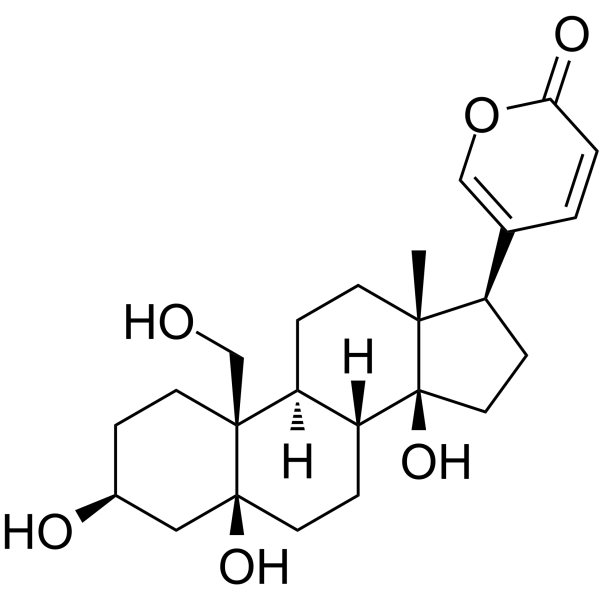
Hellebrigenol
CAS No. 508-79-2
Hellebrigenol( —— )
Catalog No. M31726 CAS No. 508-79-2
Hellebrigenol shows cytotoxicity against HepG2 cells.
Purity : >98% (HPLC)
 COA
Datasheet
HNMR
HPLC
MSDS
Handing Instructions
COA
Datasheet
HNMR
HPLC
MSDS
Handing Instructions
| Size | Price / USD | Stock | Quantity |
| 5MG | 297 | In Stock |


|
| 10MG | 468 | In Stock |
|
| 100MG | Get Quote | In Stock |
|
| 200MG | Get Quote | In Stock |
|
| 500MG | Get Quote | In Stock |
|
| 1G | Get Quote | In Stock |
|
Biological Information
-
Product NameHellebrigenol
-
NoteResearch use only, not for human use.
-
Brief DescriptionHellebrigenol shows cytotoxicity against HepG2 cells.
-
DescriptionHellebrigenol shows cytotoxicity against HepG2 cells.
-
In VitroHellebrigenol shows cytotoxicity against HepG2 cells with an IC50 of 56.581 ng/mL.
-
In Vivo——
-
Synonyms——
-
PathwayOthers
-
TargetOther Targets
-
Recptor——
-
Research Area——
-
Indication——
Chemical Information
-
CAS Number508-79-2
-
Formula Weight418.52
-
Molecular FormulaC24H34O6
-
Purity>98% (HPLC)
-
Solubility——
-
SMILES——
-
Chemical Name——
Shipping & Storage Information
-
Storage(-20℃)
-
ShippingWith Ice Pack
-
Stability≥ 2 years
Reference
molnova catalog



related products
-
HIV-1 gag Protein p2...
HIV-1 gag Protein p24 (137-154)
-
Tangshenoside I
Tangshenoside I might be a potential bioactive marker related to the hematopoietic and immunologic functions of Codonopsis Radix, which could be recommended as the index compound. It has α-glucosidase inhibition activity.
-
Methylgomisin O
Methylgomisin O is a natural product.
