


 Cart
Cart
 sales@molnova.com


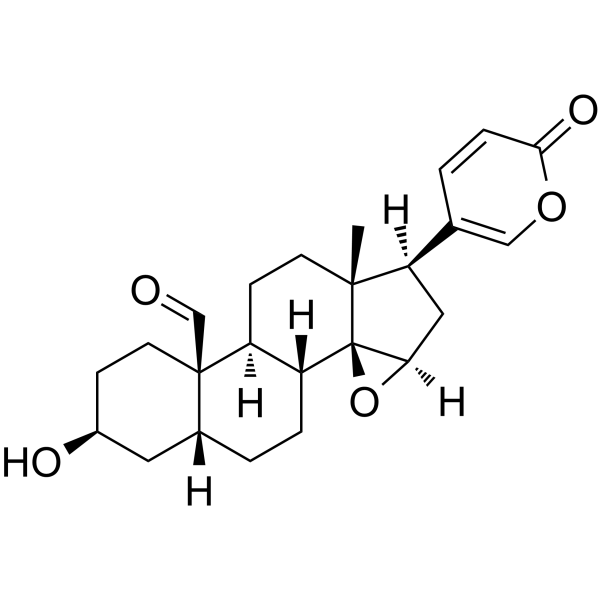
Resibufagin
CAS No. 20987-24-0
Resibufagin( —— )
Catalog No. M31722 CAS No. 20987-24-0
Resibufagin shows strong cytotoxic activity against HeLa cell line.
Purity : >98% (HPLC)
 COA
Datasheet
HNMR
HPLC
MSDS
Handing Instructions
COA
Datasheet
HNMR
HPLC
MSDS
Handing Instructions
| Size | Price / USD | Stock | Quantity |
| 5MG | 486 | In Stock |


|
| 50MG | Get Quote | In Stock |
|
| 100MG | Get Quote | In Stock |
|
| 200MG | Get Quote | In Stock |
|
| 500MG | Get Quote | In Stock |
|
| 1G | Get Quote | In Stock |
|
Biological Information
-
Product NameResibufagin
-
NoteResearch use only, not for human use.
-
Brief DescriptionResibufagin shows strong cytotoxic activity against HeLa cell line.
-
DescriptionResibufagin shows strong cytotoxic activity against HeLa cell line.
-
In Vitro——
-
In Vivo——
-
Synonyms——
-
PathwayOthers
-
TargetOther Targets
-
Recptor——
-
Research Area——
-
Indication——
Chemical Information
-
CAS Number20987-24-0
-
Formula Weight398.49
-
Molecular FormulaC24H30O5
-
Purity>98% (HPLC)
-
SolubilityIn Vitro:?DMSO : ≥ 50 mg/mL (125.47 mM)
-
SMILES——
-
Chemical Name——
Shipping & Storage Information
-
Storage(-20℃)
-
ShippingWith Ice Pack
-
Stability≥ 2 years
Reference
molnova catalog



related products
-
Decursin
Decursin is able to attenuate kainic acid-induced seizures and could have potential as an antiepileptic drug.
-
Calycanthine
Calycanthine, the principal alkaloid of the order Calycanthaceae, has been isolated from a species of the genus Psychotria, and is a central nervous system toxin, causing convulsions.
-
D-Xylose
D-Xylose ((2S,3R,4S,5R)-oxane-2,3,4,5-tetrol) is a monosaccharide widely found in yeast and involved in the metabolism of the organism.
