


 Cart
Cart
 sales@molnova.com


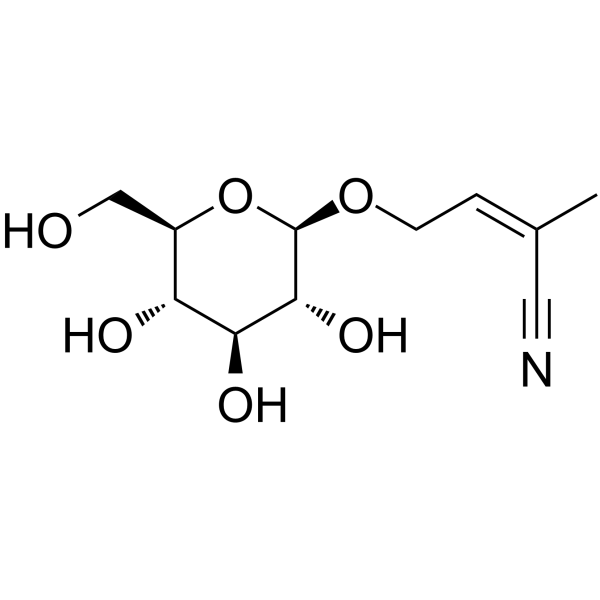
Rhodiocyanoside A
CAS No. 168433-86-1
Rhodiocyanoside A( —— )
Catalog No. M31635 CAS No. 168433-86-1
Rhodiocyanoside A has antiallergic activity, it exhibits inhibitory activity on the histamine release from rat peritoneal exudate cells sensitized with anti-DNP IgE and inhibits the PCA reaction in rats.
Purity : >98% (HPLC)
 COA
Datasheet
HNMR
HPLC
MSDS
Handing Instructions
COA
Datasheet
HNMR
HPLC
MSDS
Handing Instructions
| Size | Price / USD | Stock | Quantity |
| 1 mL x 10 mM in DMSO | 778 | In Stock |


|
| 10MG | 603 | In Stock |
|
| 50MG | Get Quote | In Stock |
|
| 100MG | Get Quote | In Stock |
|
| 200MG | Get Quote | In Stock |
|
| 500MG | Get Quote | In Stock |
|
| 1G | Get Quote | In Stock |
|
Biological Information
-
Product NameRhodiocyanoside A
-
NoteResearch use only, not for human use.
-
Brief DescriptionRhodiocyanoside A has antiallergic activity, it exhibits inhibitory activity on the histamine release from rat peritoneal exudate cells sensitized with anti-DNP IgE and inhibits the PCA reaction in rats.
-
DescriptionRhodiocyanoside A has antiallergic activity, it exhibits inhibitory activity on the histamine release from rat peritoneal exudate cells sensitized with anti-DNP IgE and inhibits the PCA reaction in rats.
-
In Vitro——
-
In Vivo——
-
Synonyms——
-
PathwayOthers
-
TargetOther Targets
-
Recptor——
-
Research Area——
-
Indication——
Chemical Information
-
CAS Number168433-86-1
-
Formula Weight259.26
-
Molecular FormulaC11H17NO6
-
Purity>98% (HPLC)
-
Solubility——
-
SMILES——
-
Chemical Name——
Shipping & Storage Information
-
Storage(-20℃)
-
ShippingWith Ice Pack
-
Stability≥ 2 years
Reference
molnova catalog



related products
-
TIBI
TIBI is an ATP-competitive Rio1 inhibitor that acts in a similar manner to fungamycin and enhances the thermal stability of the enzyme.
-
trans-2-Butene-14-di...
3-Hexenedioic acid is a normal human unsaturated dicarboxylic acid metabolite with increased excretion in patients with Dicarboxylic aciduria caused by fatty acid metabolism disorders The urinary excretion of 3-Hexenedioic acid is increased in conditions of augmented mobilization of fatty acids or inhibited fatty acid oxidation.
-
WWamide-1
WWamide-1
