


 Cart
Cart
 sales@molnova.com


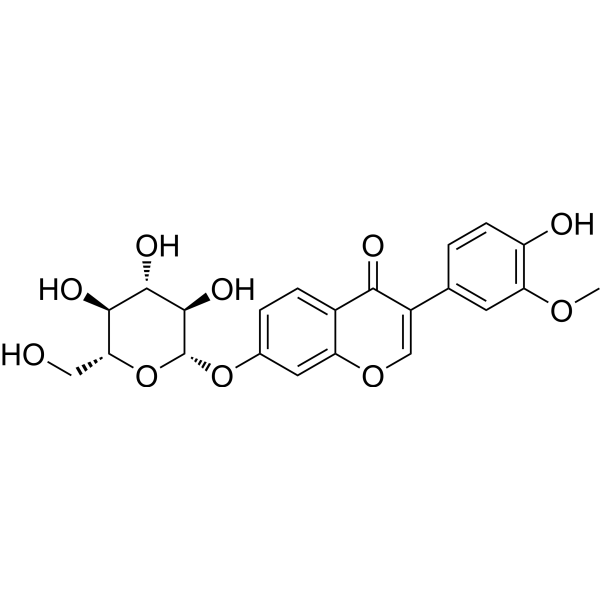
3-Methoxydaidzin
CAS No. 200127-80-6
3-Methoxydaidzin( —— )
Catalog No. M31596 CAS No. 200127-80-6
3'-Methoxydaidzin has antioxidation activity, it may be a potential neuroprotective substance in Gegen Qinlian decoction.
Purity : >98% (HPLC)
 COA
Datasheet
HNMR
HPLC
MSDS
Handing Instructions
COA
Datasheet
HNMR
HPLC
MSDS
Handing Instructions
| Size | Price / USD | Stock | Quantity |
| 50MG | Get Quote | In Stock |


|
| 100MG | Get Quote | In Stock |
|
| 200MG | Get Quote | In Stock |
|
| 500MG | Get Quote | In Stock |
|
| 1G | Get Quote | In Stock |
|
Biological Information
-
Product Name3-Methoxydaidzin
-
NoteResearch use only, not for human use.
-
Brief Description3'-Methoxydaidzin has antioxidation activity, it may be a potential neuroprotective substance in Gegen Qinlian decoction.
-
Description3'-Methoxydaidzin has antioxidation activity, it may be a potential neuroprotective substance in Gegen Qinlian decoction.
-
In Vitro——
-
In Vivo——
-
Synonyms——
-
PathwayOthers
-
TargetOther Targets
-
Recptor——
-
Research Area——
-
Indication——
Chemical Information
-
CAS Number200127-80-6
-
Formula Weight446.4
-
Molecular FormulaC22H22O10
-
Purity>98% (HPLC)
-
Solubility——
-
SMILES——
-
Chemical Name——
Shipping & Storage Information
-
Storage(-20℃)
-
ShippingWith Ice Pack
-
Stability≥ 2 years
Reference
molnova catalog



related products
-
FLUTOLANIL
Flutolanil is a broad-spectrum fungicide. Flutolanil inhibits mycelial oxygen consumption and succinate dehydrogenase in mitochondria Complex II. Flutolanil causes endocrine disruption and reproductive disorders in zebrafish after long-term exposure. Flutolanil can be used to control the fungal pathogens induced plant disease.
-
Kaempferol 7-O-rhamn...
Kaempferol 7-O-rhamnoside is a natural product from Maytenus hookeri.
-
Physalaemin
Physalaemin, a non-mammalian tachykinin, binds selectively to neurokinin-1 (NK1) receptor with high affinity.
