


 Cart
Cart
 sales@molnova.com


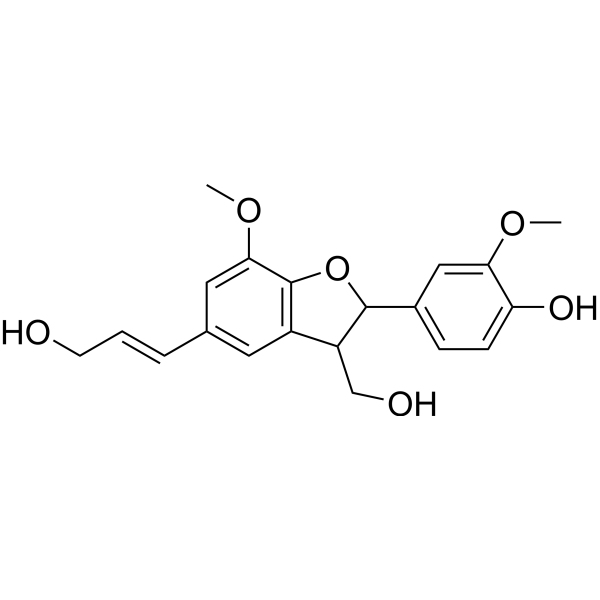
Dehydrodiconiferyl alcohol
CAS No. 4263-87-0
Dehydrodiconiferyl alcohol( —— )
Catalog No. M31525 CAS No. 4263-87-0
Dehydrodiconiferyl alcohol (DHCA) is a lignan isolated from calabash that inhibits osteoclast differentiation and oophorectomy induced bone loss by acting as an estrogen receptor agonist.
Purity : >98% (HPLC)
 COA
Datasheet
HNMR
HPLC
MSDS
Handing Instructions
COA
Datasheet
HNMR
HPLC
MSDS
Handing Instructions
| Size | Price / USD | Stock | Quantity |
| 5MG | 503 | In Stock |


|
| 10MG | 719 | In Stock |
|
| 25MG | 1102 | In Stock |
|
| 100MG | Get Quote | In Stock |
|
| 200MG | Get Quote | In Stock |
|
| 500MG | Get Quote | In Stock |
|
| 1G | Get Quote | In Stock |
|
Biological Information
-
Product NameDehydrodiconiferyl alcohol
-
NoteResearch use only, not for human use.
-
Brief DescriptionDehydrodiconiferyl alcohol (DHCA) is a lignan isolated from calabash that inhibits osteoclast differentiation and oophorectomy induced bone loss by acting as an estrogen receptor agonist.
-
DescriptionDehydrodiconiferyl alcohol (DHCA) is a lignan isolated from calabash that inhibits osteoclast differentiation and oophorectomy induced bone loss by acting as an estrogen receptor agonist.
-
In Vitro——
-
In Vivo——
-
Synonyms——
-
PathwayOthers
-
TargetOther Targets
-
Recptor——
-
Research Area——
-
Indication——
Chemical Information
-
CAS Number4263-87-0
-
Formula Weight358.39
-
Molecular FormulaC20H22O6
-
Purity>98% (HPLC)
-
Solubility——
-
SMILES——
-
Chemical Name——
Shipping & Storage Information
-
Storage(-20℃)
-
ShippingWith Ice Pack
-
Stability≥ 2 years
Reference
molnova catalog



related products
-
Bruceantin
Bruceantin is a natural product isolated from Brucea antidysenterica. Bruceantin has antitumor activity against B16 melanoma, colon 38, and L1210 and P388 leukemia in mice.
-
Visomitin
Visomitin (SKQ1 bromide, PDTP) is a mitochondria-targeted antioxidant that decreases transmembrane potential and production of reactive oxygen species (ROS).
-
(2E,4E)-2,4-Decadien...
(2E,4E)-Decadienoic acid is an anti-oomycete aliphatic compound that can be found in Coculture of Bacillus subtilis and Trichoderma asperellum.
