


 Cart
Cart
 sales@molnova.com


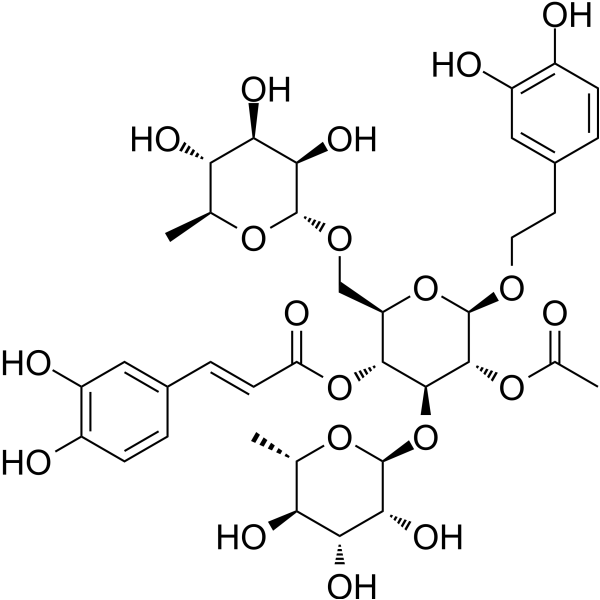
Brandioside
CAS No. 133393-81-4
Brandioside( —— )
Catalog No. M31509 CAS No. 133393-81-4
Brandioside shows strong antioxidant, and neuroprotective effects, it significantly attenuates glutamate-induced neurotoxicity at concentrations ranging from 0.1 to 10 microM; it exhibits significant inhibition of advanced glycation end product formation with the IC50 value of 4.6-25.7 μM.
Purity : >98% (HPLC)
 COA
Datasheet
HNMR
HPLC
MSDS
Handing Instructions
COA
Datasheet
HNMR
HPLC
MSDS
Handing Instructions
| Size | Price / USD | Stock | Quantity |
| 1 mL x 10 mM in DMSO | 357 | In Stock |


|
| 5MG | 235 | In Stock |
|
| 10MG | 349 | In Stock |
|
| 25MG | 565 | In Stock |
|
| 100MG | Get Quote | In Stock |
|
| 200MG | Get Quote | In Stock |
|
| 500MG | Get Quote | In Stock |
|
| 1G | Get Quote | In Stock |
|
Biological Information
-
Product NameBrandioside
-
NoteResearch use only, not for human use.
-
Brief DescriptionBrandioside shows strong antioxidant, and neuroprotective effects, it significantly attenuates glutamate-induced neurotoxicity at concentrations ranging from 0.1 to 10 microM; it exhibits significant inhibition of advanced glycation end product formation with the IC50 value of 4.6-25.7 μM.
-
DescriptionBrandioside shows strong antioxidant, and neuroprotective effects, it significantly attenuates glutamate-induced neurotoxicity at concentrations ranging from 0.1 to 10 microM; it exhibits significant inhibition of advanced glycation end product formation with the IC50 value of 4.6-25.7 μM
-
In Vitro——
-
In Vivo——
-
Synonyms——
-
PathwayOthers
-
TargetOther Targets
-
Recptor——
-
Research Area——
-
Indication——
Chemical Information
-
CAS Number133393-81-4
-
Formula Weight812.8
-
Molecular FormulaC37H48O20
-
Purity>98% (HPLC)
-
Solubility——
-
SMILES——
-
Chemical Name——
Shipping & Storage Information
-
Storage(-20℃)
-
ShippingWith Ice Pack
-
Stability≥ 2 years
Reference
molnova catalog



related products
-
Proinsulin C-Peptide...
Human proinsulin, the single-chain peptide precursor of insulin, consists of the insulin A and B chains connected by the 31 amino acid C-peptide. Cleavage of proinsulin by proteolytic enzymes produces insulin and free C-peptide.
-
(4R,5S,6S,7R)-1(10)-...
Secoaristolenedioic acid (Compound 1) is a sesquiterpene, which is found in ethanol extract of the roots and rhizomes of Nardostachys chinensis.
-
Gelidoside
Gelidoside is a natural product from Gentiana siphonantha.
