


 Cart
Cart
 sales@molnova.com


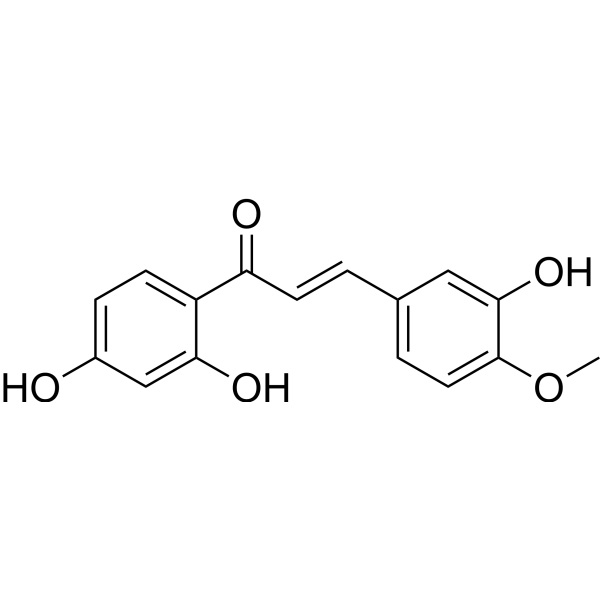
4-O-Methylbutein
CAS No. 13323-67-6
4-O-Methylbutein( —— )
Catalog No. M31496 CAS No. 13323-67-6
4-O-Methylbutein (2',3,4'-trihydroxy-4-methoxychalcone) may have anti-inflammation activity, it is a potent heme oxygenase-1 (HO-1) inducer, the upregulation of HO-1 has proven to be a useful tool for fighting inflammation.
Purity : >98% (HPLC)
 COA
Datasheet
HNMR
HPLC
MSDS
Handing Instructions
COA
Datasheet
HNMR
HPLC
MSDS
Handing Instructions
| Size | Price / USD | Stock | Quantity |
| 5MG | 486 | In Stock |


|
| 50MG | Get Quote | In Stock |
|
| 100MG | Get Quote | In Stock |
|
| 200MG | Get Quote | In Stock |
|
| 500MG | Get Quote | In Stock |
|
| 1G | Get Quote | In Stock |
|
Biological Information
-
Product Name4-O-Methylbutein
-
NoteResearch use only, not for human use.
-
Brief Description4-O-Methylbutein (2',3,4'-trihydroxy-4-methoxychalcone) may have anti-inflammation activity, it is a potent heme oxygenase-1 (HO-1) inducer, the upregulation of HO-1 has proven to be a useful tool for fighting inflammation.
-
Description4-O-Methylbutein (2',3,4'-trihydroxy-4-methoxychalcone) may have anti-inflammation activity, it is a potent heme oxygenase-1 (HO-1) inducer, the upregulation of HO-1 has proven to be a useful tool for fighting inflammation.
-
In Vitro——
-
In Vivo——
-
Synonyms——
-
PathwayOthers
-
TargetOther Targets
-
Recptor——
-
Research Area——
-
Indication——
Chemical Information
-
CAS Number13323-67-6
-
Formula Weight286.3
-
Molecular FormulaC16H14O5
-
Purity>98% (HPLC)
-
Solubility——
-
SMILES——
-
Chemical Name——
Shipping & Storage Information
-
Storage(-20℃)
-
ShippingWith Ice Pack
-
Stability≥ 2 years
Reference
molnova catalog



related products
-
OTS514 hydrochloride...
OTS514 is a highly effective TOPK(T-LAK cell-originated protein kinase) inhibitor (IC50: 2.6 nM).
-
Denzimol
Denzimol is a novel anticonvulsant compound.Denzimol is selective for tonic seizures.
-
CistanosideC
Cistanoside C (Jionoside D) is a hydroxycinnamic acid esters of phenethylalcohol glycoside, that can be isolated from roots of Rehmannia glutinosa var. purpurea.
