


 Cart
Cart
 sales@molnova.com


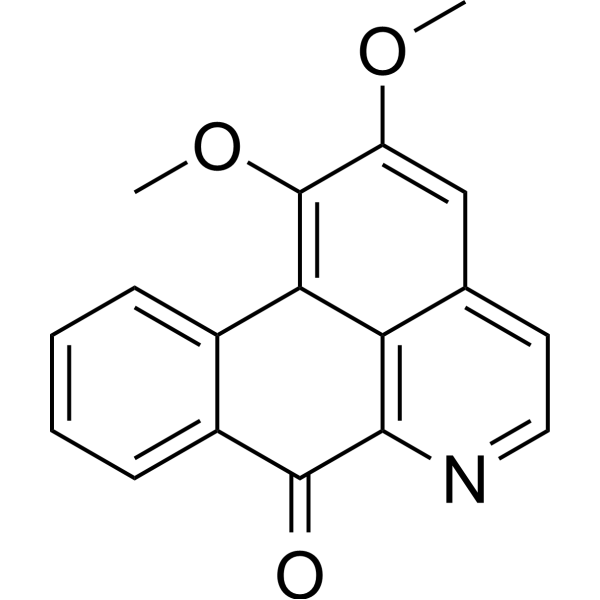
Lysicamine
CAS No. 15444-20-9
Lysicamine( —— )
Catalog No. M31478 CAS No. 15444-20-9
Lysicamine shows significant antioxidant capacity in the ORAC(FL) assay and it is active against S. epidermidis and C. dubliniensis, with MIC values in the range 12.5-100 microg mL(-1).
Purity : >98% (HPLC)
 COA
Datasheet
HNMR
HPLC
MSDS
Handing Instructions
COA
Datasheet
HNMR
HPLC
MSDS
Handing Instructions
| Size | Price / USD | Stock | Quantity |
| 5MG | 657 | In Stock |


|
| 50MG | Get Quote | In Stock |
|
| 100MG | Get Quote | In Stock |
|
| 200MG | Get Quote | In Stock |
|
| 500MG | Get Quote | In Stock |
|
| 1G | Get Quote | In Stock |
|
Biological Information
-
Product NameLysicamine
-
NoteResearch use only, not for human use.
-
Brief DescriptionLysicamine shows significant antioxidant capacity in the ORAC(FL) assay and it is active against S. epidermidis and C. dubliniensis, with MIC values in the range 12.5-100 microg mL(-1).
-
DescriptionLysicamine shows significant antioxidant capacity in the ORAC(FL) assay and it is active against S. epidermidis and C. dubliniensis, with MIC values in the range 12.5-100 microg mL(-1). Lysicamine has antimicrobial and anti-inflammation activity, the minimum inhibitory concentrations of the pour component (Streptococcus mutans, Porphyromonas gingivalis, Actinobacillus actinomycetemcomitans and Candida albicans.) is less than 5mg/ml for all four microorganisms and the minimum concentration with anti-inflammation is 0.2mg/ml for both IL-8 and IL-6. Lysicamine has antileishmanial activity. It can significantly inhibit the proliferation of melanoma cells, it has antioxidative activity and chemopreventive activity in skin melanoma cells.
-
In Vitro——
-
In Vivo——
-
Synonyms——
-
PathwayOthers
-
TargetOther Targets
-
Recptor——
-
Research Area——
-
Indication——
Chemical Information
-
CAS Number15444-20-9
-
Formula Weight291.3
-
Molecular FormulaC18H13NO3
-
Purity>98% (HPLC)
-
Solubility——
-
SMILES——
-
Chemical Name——
Shipping & Storage Information
-
Storage(-20℃)
-
ShippingWith Ice Pack
-
Stability≥ 2 years
Reference
molnova catalog



related products
-
4-O-Feruloylquinic a...
4-O-Feruloylquinic acid can be useful for the prevention of cardiovascular and other chronic diseases.
-
AGRP (87-132), human
AGRP (87-132), human
-
5,6,7,3',4'-Pentamet...
5,6,7,3',4'-pentamethoxyflavanone exhibited anti-proliferative activities.
