


 Cart
Cart
 sales@molnova.com


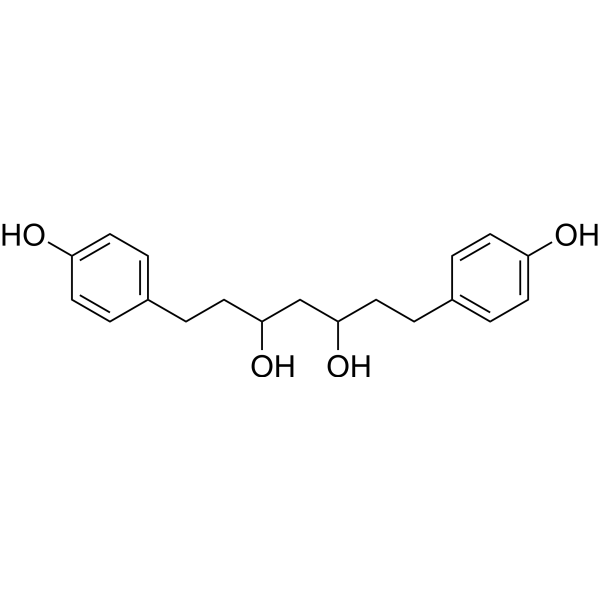
Hannokinol
CAS No. 79120-40-4
Hannokinol( —— )
Catalog No. M31475 CAS No. 79120-40-4
(+)-Hannokinol and MESO-hannokinol can significantly inhibit lipopolysaccharide-induced nitric oxide production in BV2 microglial cells at concentrations ranging from 1 microM to 100 microM.
Purity : >98% (HPLC)
 COA
Datasheet
HNMR
HPLC
MSDS
Handing Instructions
COA
Datasheet
HNMR
HPLC
MSDS
Handing Instructions
| Size | Price / USD | Stock | Quantity |
| 5MG | 495 | In Stock |


|
| 50MG | Get Quote | In Stock |
|
| 100MG | Get Quote | In Stock |
|
| 200MG | Get Quote | In Stock |
|
| 500MG | Get Quote | In Stock |
|
| 1G | Get Quote | In Stock |
|
Biological Information
-
Product NameHannokinol
-
NoteResearch use only, not for human use.
-
Brief Description(+)-Hannokinol and MESO-hannokinol can significantly inhibit lipopolysaccharide-induced nitric oxide production in BV2 microglial cells at concentrations ranging from 1 microM to 100 microM.
-
Description(+)-Hannokinol and MESO-hannokinol can significantly inhibit lipopolysaccharide-induced nitric oxide production in BV2 microglial cells at concentrations ranging from 1 microM to 100 microM.
-
In Vitro——
-
In Vivo——
-
Synonyms——
-
PathwayOthers
-
TargetOther Targets
-
Recptor——
-
Research Area——
-
Indication——
Chemical Information
-
CAS Number79120-40-4
-
Formula Weight316.4
-
Molecular FormulaC19H24O4
-
Purity>98% (HPLC)
-
Solubility——
-
SMILES——
-
Chemical Name——
Shipping & Storage Information
-
Storage(-20℃)
-
ShippingWith Ice Pack
-
Stability≥ 2 years
Reference
molnova catalog



related products
-
calcium hydroxymethi...
Calcium hydroxymethionine also known as 2-Hydroxy-4-(methylthio)butanoic acid calcium salt is a nutrition enhancer. It exists as a solid soluble (in water) and a weakly acidic compound (based on its pKa). 2-Hydroxy-4-(methylthio)butanoic acid has been primarily detected in urine.
-
Hythiemoside B
Hythiemoside B is a natural product for research related to life sciences.
-
Furanodienone
Furanodienone has effects on MCF-7 cells are mediated, at least in part, by inhibiting ERα signaling.
