


 Cart
Cart
 sales@molnova.com


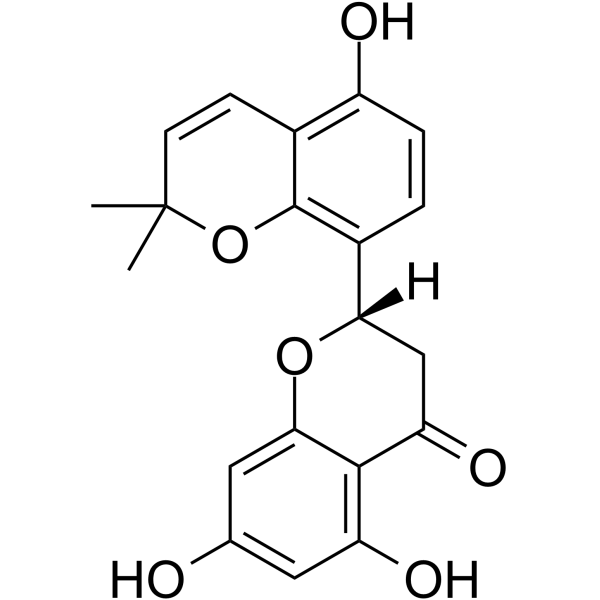
Sanggenone H
CAS No. 86450-80-8
Sanggenone H( —— )
Catalog No. M31458 CAS No. 86450-80-8
Sanggenone H may have antiphlogistic activity, it attenuated the secretion of TNF-α± and IL-1α2 and inhibited the NF-κB nuclear translocation in LPS-stimulated macrophages.
Purity : >98% (HPLC)
 COA
Datasheet
HNMR
HPLC
MSDS
Handing Instructions
COA
Datasheet
HNMR
HPLC
MSDS
Handing Instructions
| Size | Price / USD | Stock | Quantity |
| 5MG | 379 | In Stock |


|
| 50MG | Get Quote | In Stock |
|
| 100MG | Get Quote | In Stock |
|
| 200MG | Get Quote | In Stock |
|
| 500MG | Get Quote | In Stock |
|
| 1G | Get Quote | In Stock |
|
Biological Information
-
Product NameSanggenone H
-
NoteResearch use only, not for human use.
-
Brief DescriptionSanggenone H may have antiphlogistic activity, it attenuated the secretion of TNF-α± and IL-1α2 and inhibited the NF-κB nuclear translocation in LPS-stimulated macrophages.
-
DescriptionSanggenone H may have antiphlogistic activity, it attenuated the secretion of TNF-α± and IL-1α2 and inhibited the NF-κB nuclear translocation in LPS-stimulated macrophages.
-
In Vitro——
-
In Vivo——
-
Synonyms——
-
PathwayOthers
-
TargetOther Targets
-
Recptor——
-
Research Area——
-
Indication——
Chemical Information
-
CAS Number86450-80-8
-
Formula Weight354.4
-
Molecular FormulaC20H18O6
-
Purity>98% (HPLC)
-
Solubility——
-
SMILES——
-
Chemical Name——
Shipping & Storage Information
-
Storage(-20℃)
-
ShippingWith Ice Pack
-
Stability≥ 2 years
Reference
molnova catalog



related products
-
5-methoxydeydrodiiso...
Maceneolignan A is a natural product that can be isolated from mace, the aril of Myristica fragrans (Myristicaceae). Maceneolignan A inhibits the release of β-hexosaminidase in RBL-2H3 cells, with an IC50 of 48.4 μM. Maceneolignan A inhibits the release of TNF-α in antigen stimulated RBL-2H3 cells, with an IC50 of 63.7 μM.
-
Carsalame
Carsalam is a nonsteroidal anti-inflammatory drug.
-
Glycerophosphocholin...
Glycerylphosphorylcholine is a natural choline compound found in the brain and in milk. It is also a parasympathomimetic acetylcholine precursor which may have a potential for the treatment of Alzheimer's disease and dementia.
