


 Cart
Cart
 sales@molnova.com


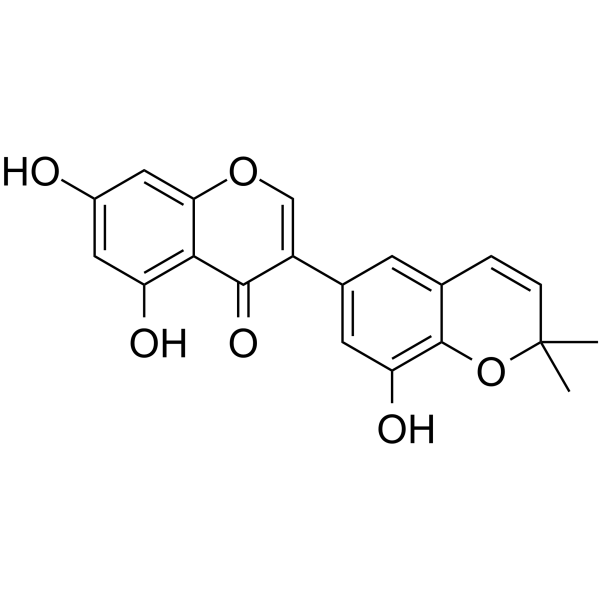
Semilicoisoflavone B
CAS No. 129280-33-7
Semilicoisoflavone B( —— )
Catalog No. M31447 CAS No. 129280-33-7
Semilicoisoflavone B can inhibit sorbitol formation of rat lens incubated with a high concentration of glucose, indicates that it may be effective for preventing osmotic stress in hyperglycemia.
Purity : >98% (HPLC)
 COA
Datasheet
HNMR
HPLC
MSDS
Handing Instructions
COA
Datasheet
HNMR
HPLC
MSDS
Handing Instructions
| Size | Price / USD | Stock | Quantity |
| 2MG | 525 | In Stock |


|
| 5MG | 1007 | In Stock |
|
| 100MG | Get Quote | In Stock |
|
| 200MG | Get Quote | In Stock |
|
| 500MG | Get Quote | In Stock |
|
| 1G | Get Quote | In Stock |
|
Biological Information
-
Product NameSemilicoisoflavone B
-
NoteResearch use only, not for human use.
-
Brief DescriptionSemilicoisoflavone B can inhibit sorbitol formation of rat lens incubated with a high concentration of glucose, indicates that it may be effective for preventing osmotic stress in hyperglycemia.
-
DescriptionSemilicoisoflavone B can inhibit sorbitol formation of rat lens incubated with a high concentration of glucose, indicates that it may be effective for preventing osmotic stress in hyperglycemia.
-
In Vitro——
-
In Vivo——
-
Synonyms——
-
PathwayOthers
-
TargetOther Targets
-
Recptor——
-
Research Area——
-
Indication——
Chemical Information
-
CAS Number129280-33-7
-
Formula Weight352.3
-
Molecular FormulaC20H16O6
-
Purity>98% (HPLC)
-
SolubilityIn Vitro:?DMSO : 50 mg/mL (141.91 mM)
-
SMILES——
-
Chemical Name——
Shipping & Storage Information
-
Storage(-20℃)
-
ShippingWith Ice Pack
-
Stability≥ 2 years
Reference
molnova catalog



related products
-
FAPI-2
FAPI-2 is a specific inhibitor of fibroblast-activated protein based on the radiotracer FAP labeling. It has anticancer activity and can be used in the study of pancreatic cancer.
-
RNAIII-inhibiting pe...
RNAIII-inhibiting peptide
-
Neuropeptide Y (18-3...
Neuropeptide Y (18-36) (porcine) is a competitive neuropeptide Y (NPY) cardiac receptor antagonist. Neuropeptide Y (18-36) (porcine) inhibits the binding of I-NPY to cardiac ventricular membranes in a concentration-dependent manner with an IC50 value of 158 nM and an Ki value of 140 nM. Neuropeptide Y (18-36) (porcine) can be used for the research of congestive heart failure.
