


 Cart
 sales@molnova.com


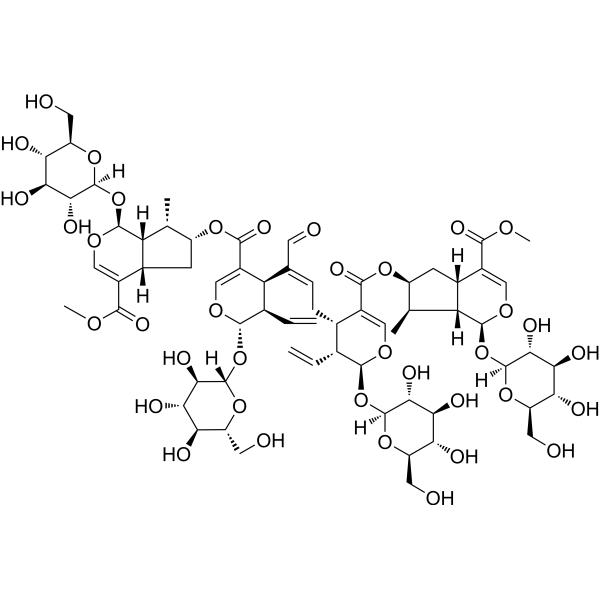
Dipsanoside A
CAS No. 889678-62-0
Dipsanoside A( —— )
Catalog No. M31413 CAS No. 889678-62-0
Dipsanoside A is a natural product.
Purity : >98% (HPLC)
 COA
Datasheet
HNMR
HPLC
MSDS
Handing Instructions
| Size | Price / USD | Stock | Quantity |
| 1 mL x 10 mM in DMSO | 377 | In Stock |


|
| 5MG | 188 | In Stock |
|
| 10MG | 282 | In Stock |
|
| 25MG | 489 | In Stock |
|
| 50MG | 682 | In Stock |
|
| 100MG | Get Quote | In Stock |
|
| 200MG | Get Quote | In Stock |
|
| 500MG | Get Quote | In Stock |
|
| 1G | Get Quote | In Stock |
|
Biological Information
-
Product NameDipsanoside A
-
NoteResearch use only, not for human use.
-
Brief DescriptionDipsanoside A is a natural product.
-
DescriptionDipsanoside A is a natural product.
-
In Vitro——
-
In Vivo——
-
Synonyms——
-
PathwayOthers
-
TargetOther Targets
-
Recptor——
-
Research Area——
-
Indication——
Chemical Information
-
CAS Number889678-62-0
-
Formula Weight1475.4
-
Molecular FormulaC66H90O37
-
Purity>98% (HPLC)
-
Solubility——
-
SMILES——
-
Chemical Name——
Shipping & Storage Information
-
Storage(-20℃)
-
ShippingWith Ice Pack
-
Stability≥ 2 years
Reference



-
Stearyldiethanolamin...
Stearyldiethanolamine can be used in studies about antibacterial nonwoven fabric and antibacterial freshness-keeping film.
-
L,L-Dityrosine
L,L-Dityrosine (o,o'-Dityrosine) is a constituent of acid hydrolysates of a number of biological materials, including the insect cuticular resilin.
-
Cltrinin
Citrinin (NSC 186) is a mycotoxin that causes food contamination and has different toxic effects. Citrinin is an effective oral anticancer agent. Citrinin has various regulatory effects on mouse immune system, including regulating the number of immune cells, inducing apoptosis and autophagy of immune cells, altering toll-like receptor expression and cytokine production. Citrinin can induce oxidative stress and lead to early apoptosis of oocytes. Low doses of Citrinin have neuroprotective effects against glutamate-induced excitotoxicity in rat cortical neurons. In addition, Citrinin also has antibacterial activity.
