


 Cart
Cart
 sales@molnova.com


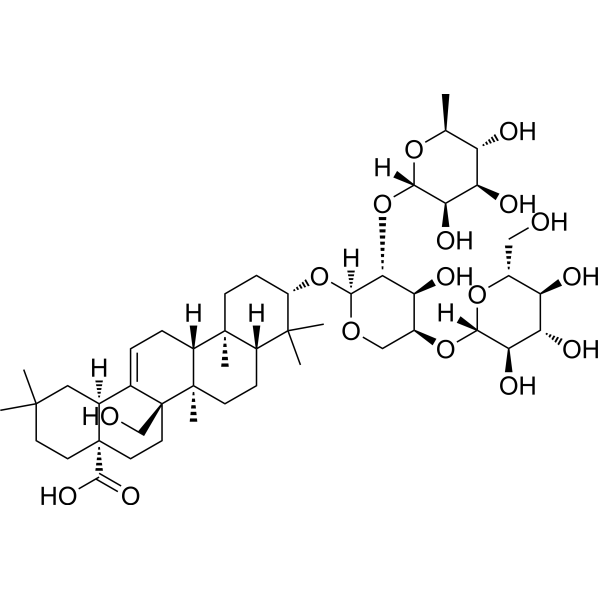
Raddeanoside 20
CAS No. 335354-79-5
Raddeanoside 20( —— )
Catalog No. M31380 CAS No. 335354-79-5
Raddeanoside 20 can slightly suppress the superoxide generation induced by N-formyl-methionyl-leucyl-phenylalanine (fMLP) in a concentration dependent manner.
Purity : >98% (HPLC)
 COA
Datasheet
HNMR
HPLC
MSDS
Handing Instructions
COA
Datasheet
HNMR
HPLC
MSDS
Handing Instructions
| Size | Price / USD | Stock | Quantity |
| 5MG | 162 | In Stock |


|
| 50MG | Get Quote | In Stock |
|
| 100MG | Get Quote | In Stock |
|
| 200MG | Get Quote | In Stock |
|
| 500MG | Get Quote | In Stock |
|
| 1G | Get Quote | In Stock |
|
Biological Information
-
Product NameRaddeanoside 20
-
NoteResearch use only, not for human use.
-
Brief DescriptionRaddeanoside 20 can slightly suppress the superoxide generation induced by N-formyl-methionyl-leucyl-phenylalanine (fMLP) in a concentration dependent manner.
-
DescriptionRaddeanoside 20 can slightly suppress the superoxide generation induced by N-formyl-methionyl-leucyl-phenylalanine (fMLP) in a concentration dependent manner.
-
In Vitro——
-
In Vivo——
-
Synonyms——
-
PathwayOthers
-
TargetOther Targets
-
Recptor——
-
Research Area——
-
Indication——
Chemical Information
-
CAS Number335354-79-5
-
Formula Weight913.1
-
Molecular FormulaC47H76O17
-
Purity>98% (HPLC)
-
Solubility——
-
SMILES——
-
Chemical Name——
Shipping & Storage Information
-
Storage(-20℃)
-
ShippingWith Ice Pack
-
Stability≥ 2 years
Reference
molnova catalog



related products
-
EM-12
2-(2,6-Dioxopiperidin-3-yl)phthalimidine (EM-12 (2-(2,6-Dioxopiperidin-3-yl)phthalimidine)) is a teratogenic Thalidomide analogue that is more active and significantly more stable against hydrolysis than Thalidomide, enhancing 1,2-dimethylhydrazine-induced rat colon adenocarcinomas .
-
(+)-Fenchone
(+)-Fenchone has anti-inflammatory and antimicrobial activities.
-
Probimane
Probimane had Anti-proliferative effects, cell cycle G2/M phase arrest and blocking of chromosome segregation in human tumor cell lines with MST-16.
