


 Cart
Cart
 sales@molnova.com


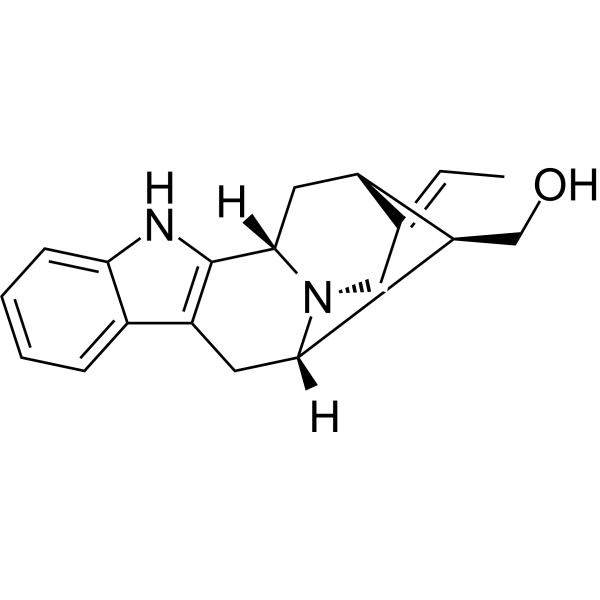
16-Epikoumidine
CAS No. 124096-81-7
16-Epikoumidine( —— )
Catalog No. M31360 CAS No. 124096-81-7
16-Epikoumidine is a natural product for research related to life sciences.
Purity : >98% (HPLC)
 COA
Datasheet
HNMR
HPLC
MSDS
Handing Instructions
COA
Datasheet
HNMR
HPLC
MSDS
Handing Instructions
| Size | Price / USD | Stock | Quantity |
| 5MG | 666 | In Stock |


|
| 50MG | Get Quote | In Stock |
|
| 100MG | Get Quote | In Stock |
|
| 200MG | Get Quote | In Stock |
|
| 500MG | Get Quote | In Stock |
|
| 1G | Get Quote | In Stock |
|
Biological Information
-
Product Name16-Epikoumidine
-
NoteResearch use only, not for human use.
-
Brief Description16-Epikoumidine is a natural product for research related to life sciences.
-
Description16-Epikoumidine is a natural product for research related to life sciences.
-
In Vitro——
-
In Vivo——
-
Synonyms——
-
PathwayOthers
-
TargetOther Targets
-
Recptor——
-
Research Area——
-
Indication——
Chemical Information
-
CAS Number124096-81-7
-
Formula Weight294.4
-
Molecular FormulaC19H22N2O
-
Purity>98% (HPLC)
-
Solubility——
-
SMILES——
-
Chemical Name——
Shipping & Storage Information
-
Storage(-20℃)
-
ShippingWith Ice Pack
-
Stability≥ 2 years
Reference
molnova catalog



related products
-
12-Dihexadecanoyl-sn...
PE(14:0/14:0) is a phosphatidylethanolamine (PE or GPEtn). It is a glycerophospholipid in which a phosphorylethanolamine moiety occupies a glycerol substitution site. PE(14:0/14:0) in particular consists of two chains of myristic acid at the C-1 and C-2 positions. The myristic acid moieties are derived from nutmeg and butter.
-
Flindersine
Flindersine
-
Gn-RH Associated Pep...
GnRH Associated Peptide (GAP) (1-13), human is an amino acid peptide fragment derived from GnRH. GAP can increase the secretion of luteinizing hormone (LH) and follicle-stimulating hormone (FSH) in rat anterior pituitary cells. GAP also inhibit the secretion of prolactin.
