


 Cart
Cart
 sales@molnova.com


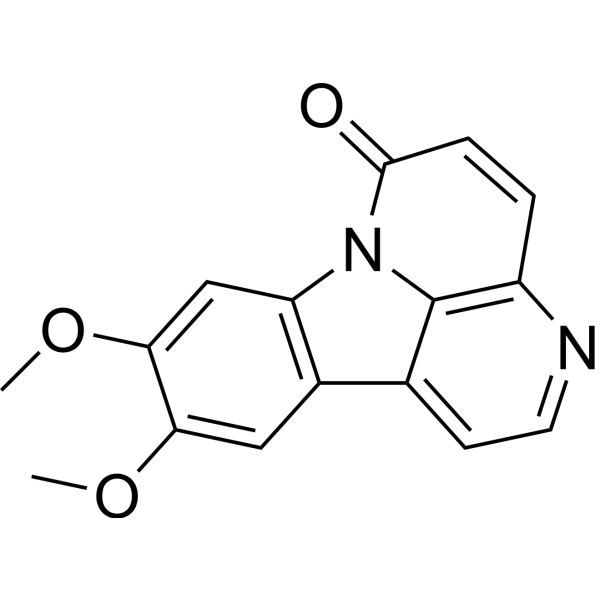
9,10-Dimethoxycanthin-6-one
CAS No. 155861-51-1
9,10-Dimethoxycanthin-6-one( —— )
Catalog No. M31217 CAS No. 155861-51-1
9,10-Dimethoxycanthin-6-one shows cytotoxic activity against a HT-1080 human fibrosarcoma cell line( IC50 = 5.0 microM).
Purity : >98% (HPLC)
 COA
Datasheet
HNMR
HPLC
MSDS
Handing Instructions
COA
Datasheet
HNMR
HPLC
MSDS
Handing Instructions
| Size | Price / USD | Stock | Quantity |
| 5MG | 351 | In Stock |


|
| 50MG | Get Quote | In Stock |
|
| 100MG | Get Quote | In Stock |
|
| 200MG | Get Quote | In Stock |
|
| 500MG | Get Quote | In Stock |
|
| 1G | Get Quote | In Stock |
|
Biological Information
-
Product Name9,10-Dimethoxycanthin-6-one
-
NoteResearch use only, not for human use.
-
Brief Description9,10-Dimethoxycanthin-6-one shows cytotoxic activity against a HT-1080 human fibrosarcoma cell line( IC50 = 5.0 microM).
-
Description9,10-Dimethoxycanthin-6-one shows cytotoxic activity against a HT-1080 human fibrosarcoma cell line( IC50 = 5.0 microM).
-
In Vitro——
-
In Vivo——
-
Synonyms——
-
PathwayOthers
-
TargetOther Targets
-
Recptor——
-
Research Area——
-
Indication——
Chemical Information
-
CAS Number155861-51-1
-
Formula Weight280.3
-
Molecular FormulaC16H12N2O3
-
Purity>98% (HPLC)
-
Solubility——
-
SMILES——
-
Chemical Name——
Shipping & Storage Information
-
Storage(-20℃)
-
ShippingWith Ice Pack
-
Stability≥ 2 years
Reference
molnova catalog



related products
-
14-Episinomenine
14-Episinomenine is an alkaloid that can be isolated from Stephania cepharantha.
-
Ganoderenic acid F
Ganoderenic acid F is a natural product for research related to life sciences.
-
Ac2-12
Annexin/lipocortin 1-mimetic peptide; inhibits leukocyte extravasation. Reduces neutrophil adhesion and emigration, and promotes detachment of neutrophils from activated mesenteric endothelium in mice in vivo.
