


 Cart
 sales@molnova.com


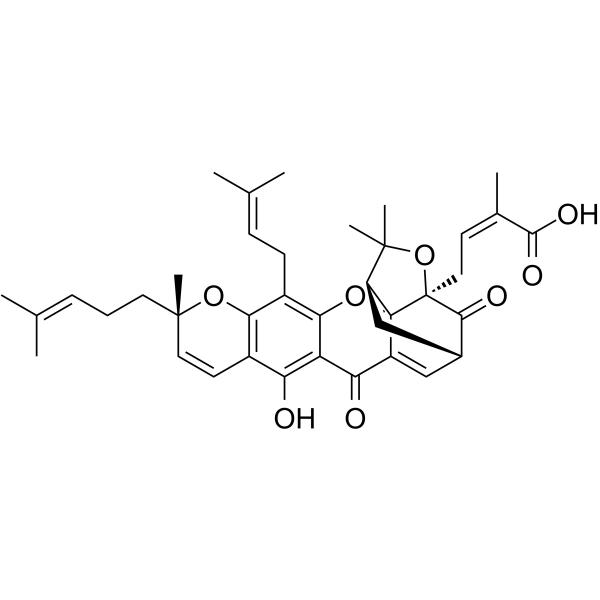
Epigambogic acid
CAS No. 887606-04-4
Epigambogic acid( —— )
Catalog No. M31206 CAS No. 887606-04-4
Epigambogic acid is a natural compound that can be extracted from plants such as cotton root and sweetgum.
Purity : >98% (HPLC)
 COA
Datasheet
HNMR
HPLC
MSDS
Handing Instructions
| Size | Price / USD | Stock | Quantity |
| 5MG | 330 | In Stock |


|
| 10MG | 489 | In Stock |
|
| 25MG | 782 | In Stock |
|
| 100MG | Get Quote | In Stock |
|
| 200MG | Get Quote | In Stock |
|
| 500MG | Get Quote | In Stock |
|
| 1G | Get Quote | In Stock |
|
Biological Information
-
Product NameEpigambogic acid
-
NoteResearch use only, not for human use.
-
Brief DescriptionEpigambogic acid is a natural compound that can be extracted from plants such as cotton root and sweetgum.
-
DescriptionEpigambogic acid is a natural compound that can be extracted from plants such as cotton root and sweetgum. It has antitumor, antitussive, expectorant, and anti-inflammatory activities.
-
In Vitro——
-
In Vivo——
-
Synonyms——
-
PathwayOthers
-
TargetOther Targets
-
Recptor——
-
Research Area——
-
Indication——
Chemical Information
-
CAS Number887606-04-4
-
Formula Weight628.8
-
Molecular FormulaC38H44O8
-
Purity>98% (HPLC)
-
Solubility——
-
SMILES——
-
Chemical Name——
Shipping & Storage Information
-
Storage(-20℃)
-
ShippingWith Ice Pack
-
Stability≥ 2 years
Reference



-
Peanutprocyanidin A
Peanut procyanidin A is a type of A-type procyanidin that can be extracted from peanut skins. Peanut procyanidin A can protect prostate DU145 cells from H2O2-induced oxidative stress damage through the MAPKs signaling pathway, alleviate cell cycle arrest, and reduce cell apoptosis. Peanut procyanidin A can also regulate gut microbiota and metabolism in mice with DSS -induced ulcerative colitis.
-
Ophiogenin 3-O-α-L-r...
Ophiogenin 3-O-α-L-rhamnopyranosyl-(1→2)-β-D-glucopyranoside is a natural product, and has good pharmacological effects on the cardiovascular system.
-
TMRM Perchlorate
TMRM Perchlorate is a cell-permeant cationic lipophilic red fluorescent dye (λex=530 nm, λem=592 nm). TMRM Perchlorate is a fluorescent probe (excitation, 530±21 nm; emission, 592±22 nm). In the presence of TMRM Perchlorate (2 μM) the coupled respiration with Complex I substrates or upon the addition of Complex II substrate is decreased by 27%.
