


 Cart
Cart
 sales@molnova.com


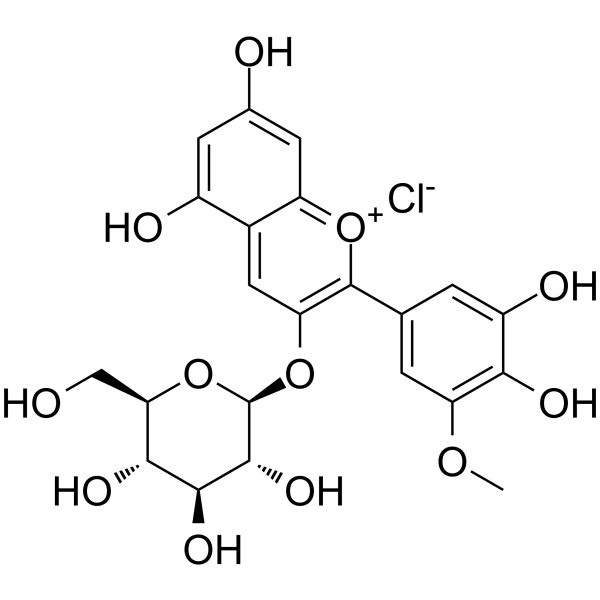
Petunidin-3-O-glucoside chloride
CAS No. 6988-81-4
Petunidin-3-O-glucoside chloride( —— )
Catalog No. M31189 CAS No. 6988-81-4
Petunidin-3-O-glucoside chloride has significantly higher antioxidant activity than the Fe2+ control. Petunidin-3-O-glucoside causes problems in digestibility, may be important dietary supplements with beneficial health effects.
Purity : >98% (HPLC)
 COA
Datasheet
HNMR
HPLC
MSDS
Handing Instructions
COA
Datasheet
HNMR
HPLC
MSDS
Handing Instructions
| Size | Price / USD | Stock | Quantity |
| 5MG | 478 | In Stock |


|
| 50MG | Get Quote | In Stock |
|
| 100MG | Get Quote | In Stock |
|
| 200MG | Get Quote | In Stock |
|
| 500MG | Get Quote | In Stock |
|
| 1G | Get Quote | In Stock |
|
Biological Information
-
Product NamePetunidin-3-O-glucoside chloride
-
NoteResearch use only, not for human use.
-
Brief DescriptionPetunidin-3-O-glucoside chloride has significantly higher antioxidant activity than the Fe2+ control. Petunidin-3-O-glucoside causes problems in digestibility, may be important dietary supplements with beneficial health effects.
-
DescriptionPetunidin-3-O-glucoside chloride has significantly higher antioxidant activity than the Fe2+ control. Petunidin-3-O-glucoside causes problems in digestibility, may be important dietary supplements with beneficial health effects.
-
In Vitro——
-
In Vivo——
-
Synonyms——
-
PathwayOthers
-
TargetOther Targets
-
Recptor——
-
Research Area——
-
Indication——
Chemical Information
-
CAS Number6988-81-4
-
Formula Weight514.9
-
Molecular FormulaC22H23ClO12
-
Purity>98% (HPLC)
-
Solubility——
-
SMILES——
-
Chemical Name——
Shipping & Storage Information
-
Storage(-20℃)
-
ShippingWith Ice Pack
-
Stability≥ 2 years
Reference
molnova catalog



related products
-
5-ALA benzyl ester h...
5-ALA benzyl ester hydrochloride is a protoporphyrin precursor and can be used as a photodetection agent.
-
H-Leu-Leu-Ome.HCl
H-Leu-Leu-Ome.HCl is a compound.
-
Otophylloside L
Otophylloside L is a pregnane glycosides isolated from the roots of Cynanchum otophyllum. Otophylloside L can be used in epilepsy research.
