


 Cart
 sales@molnova.com


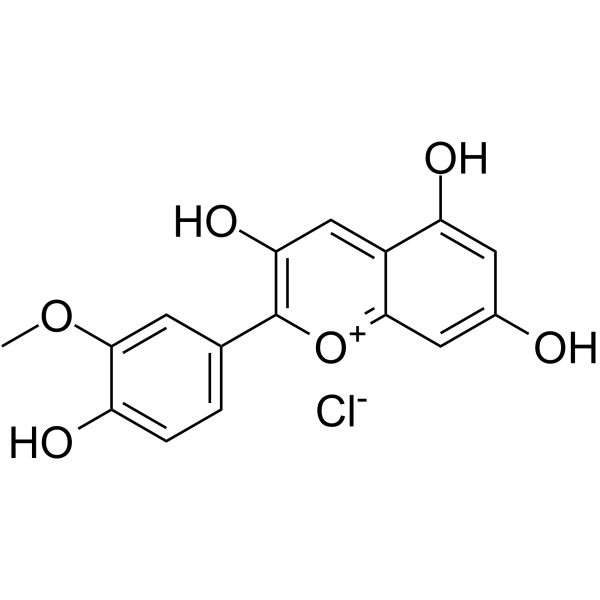
Peonidin chloride
CAS No. 134-01-0
Peonidin chloride( —— )
Catalog No. M31182 CAS No. 134-01-0
Peonidin chloride has antioxidant activity. Peonidin has show potent inhibitory and apoptotic effects on cancer cells in vitro, notably metastatic human breast cancer cells.
Purity : >98% (HPLC)
 COA
Datasheet
HNMR
HPLC
MSDS
Handing Instructions
| Size | Price / USD | Stock | Quantity |
| 5MG | 358 | In Stock |


|
| 50MG | Get Quote | In Stock |
|
| 100MG | Get Quote | In Stock |
|
| 200MG | Get Quote | In Stock |
|
| 500MG | Get Quote | In Stock |
|
| 1G | Get Quote | In Stock |
|
Biological Information
-
Product NamePeonidin chloride
-
NoteResearch use only, not for human use.
-
Brief DescriptionPeonidin chloride has antioxidant activity. Peonidin has show potent inhibitory and apoptotic effects on cancer cells in vitro, notably metastatic human breast cancer cells.
-
DescriptionPeonidin chloride has antioxidant activity. Peonidin has show potent inhibitory and apoptotic effects on cancer cells in vitro, notably metastatic human breast cancer cells.
-
In Vitro——
-
In Vivo——
-
Synonyms——
-
PathwayOthers
-
TargetOther Targets
-
Recptor——
-
Research Area——
-
Indication——
Chemical Information
-
CAS Number134-01-0
-
Formula Weight336.7
-
Molecular FormulaC16H13ClO6
-
Purity>98% (HPLC)
-
SolubilityIn Vitro:?DMSO : 100 mg/mL (296.98 mM)
-
SMILES——
-
Chemical Name——
Shipping & Storage Information
-
Storage(-20℃)
-
ShippingWith Ice Pack
-
Stability≥ 2 years
Reference
molnova catalog



related products
-
Deacylmetaplexigenin
Deacylmetaplexigenin is a pregnane glycoside isolated from Asclepias incarnate.
-
Hapepunine
Hapepunine is a N-methyl-22,26-epiminochole stene, that can be isaolated from the aerial parts of Fritillaria camtschatcensis.
-
TMN355
TMN355 is a potent chemical inhibitor of cyclophilin A and reduces foam cell formation and cytokine secretion,and is used for atherosclerosis. Silencing cyclophilin A in THP-1 cells and human monocytes using siRNA or chemical inhibitor, TMN355 resulted in decrease in lipid uptake by 65-75% even after exposure to oxidized LDL.
