


 Cart
Cart
 sales@molnova.com


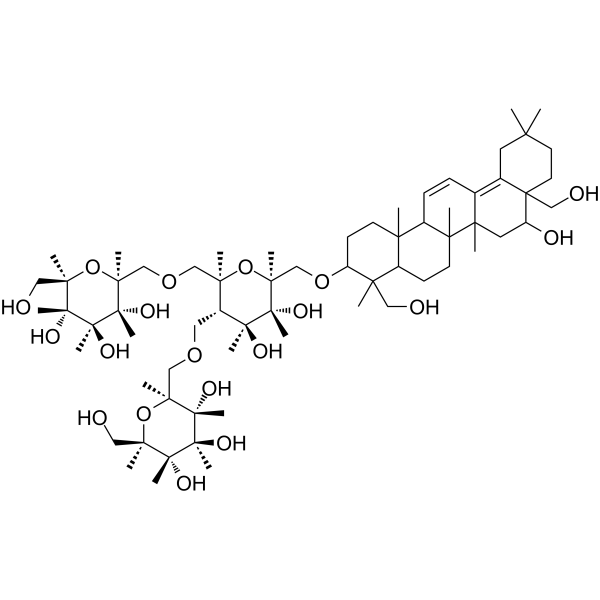
Clinopodiside A
CAS No. 142809-89-0
Clinopodiside A( —— )
Catalog No. M31170 CAS No. 142809-89-0
Clinopodiside A is a natural product from Clinopodium chinense.
Purity : >98% (HPLC)
 COA
Datasheet
HNMR
HPLC
MSDS
Handing Instructions
COA
Datasheet
HNMR
HPLC
MSDS
Handing Instructions
| Size | Price / USD | Stock | Quantity |
| 5MG | 76 | In Stock |


|
| 10MG | 109 | In Stock |
|
| 25MG | 180 | In Stock |
|
| 50MG | 259 | In Stock |
|
| 100MG | 384 | In Stock |
|
| 200MG | 572 | In Stock |
|
| 500MG | Get Quote | In Stock |
|
| 1G | Get Quote | In Stock |
|
Biological Information
-
Product NameClinopodiside A
-
NoteResearch use only, not for human use.
-
Brief DescriptionClinopodiside A is a natural product from Clinopodium chinense.
-
DescriptionClinopodiside A is a natural product from Clinopodium chinense.
-
In Vitro——
-
In Vivo——
-
Synonyms——
-
PathwayOthers
-
TargetOther Targets
-
Recptor——
-
Research Area——
-
Indication——
Chemical Information
-
CAS Number142809-89-0
-
Formula Weight959.12
-
Molecular FormulaC48H78O19
-
Purity>98% (HPLC)
-
Solubility——
-
SMILES——
-
Chemical Name——
Shipping & Storage Information
-
Storage(-20℃)
-
ShippingWith Ice Pack
-
Stability≥ 2 years
Reference
molnova catalog



related products
-
Azido-C6-OH
Azido-C6-OH is a cleavable ADC linker used to synthesize antibody-drug conjugates (ADCs).
-
Yadanzigan
Yadanzigan (YDZG) is an anti-inflammatory agent and a NLRP3 inhibitor. Yadanzigan specifically inhibits NLRP3 activation via inhibiting NF-κB pathway and Reactive Oxygen Species production. Yadanzigan also moderates LPS -induced acute lung injury (ALI) in mice.
-
Dynorphin A (1-11), ...
Dynorphin A (1-11), porcine
