


 Cart
Cart
 sales@molnova.com


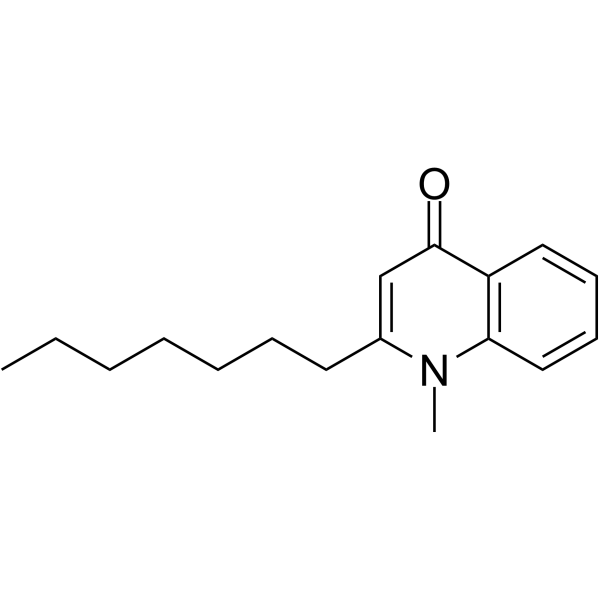
Schinifoline
CAS No. 80554-58-1
Schinifoline( —— )
Catalog No. M31068 CAS No. 80554-58-1
Schinifoline is a quinolone derivative extracted from Zanthoxylum schinifolium Sieb with cytotoxic activity that promotes radiosensitization of cancer cells, affects the cell cycle and apoptosis.
Purity : >98% (HPLC)
 COA
Datasheet
HNMR
HPLC
MSDS
Handing Instructions
COA
Datasheet
HNMR
HPLC
MSDS
Handing Instructions
| Size | Price / USD | Stock | Quantity |
| 1 mL x 10 mM in DMSO | 234 | In Stock |


|
| 5MG | 258 | In Stock |
|
| 10MG | 376 | In Stock |
|
| 25MG | 598 | In Stock |
|
| 50MG | 761 | In Stock |
|
| 100MG | Get Quote | In Stock |
|
| 200MG | Get Quote | In Stock |
|
| 500MG | Get Quote | In Stock |
|
| 1G | Get Quote | In Stock |
|
Biological Information
-
Product NameSchinifoline
-
NoteResearch use only, not for human use.
-
Brief DescriptionSchinifoline is a quinolone derivative extracted from Zanthoxylum schinifolium Sieb with cytotoxic activity that promotes radiosensitization of cancer cells, affects the cell cycle and apoptosis.
-
DescriptionSchinifoline is a quinolone derivative extracted from Zanthoxylum schinifolium Sieb with cytotoxic activity that promotes radiosensitization of cancer cells, affects the cell cycle and apoptosis.
-
In Vitro——
-
In Vivo——
-
Synonyms——
-
PathwayOthers
-
TargetOther Targets
-
Recptor——
-
Research Area——
-
Indication——
Chemical Information
-
CAS Number80554-58-1
-
Formula Weight257.4
-
Molecular FormulaC17H23NO
-
Purity>98% (HPLC)
-
Solubility——
-
SMILES——
-
Chemical Name——
Shipping & Storage Information
-
Storage(-20℃)
-
ShippingWith Ice Pack
-
Stability≥ 2 years
Reference
molnova catalog



related products
-
DS-2330
DS-2330 is a phosphorous lowering agent for treating hyperphosphatemia in chronic kidney disease.
-
iso-proylFerulic aci...
Isopropyl ferulate, isolated from Notopterygium incisum, is used in the reduction of pharmaceuticals, preparation of antifungal agents, cosmetics and as antioxidant agent and so forth.
-
5(6)-FAM SE
5(6)-FAM SE is an amine-reactive green fluorescent dye widely used for labeling proteins or other molecules that contain a primary or secondary aliphatic amine.
