


 Cart
Cart
 sales@molnova.com


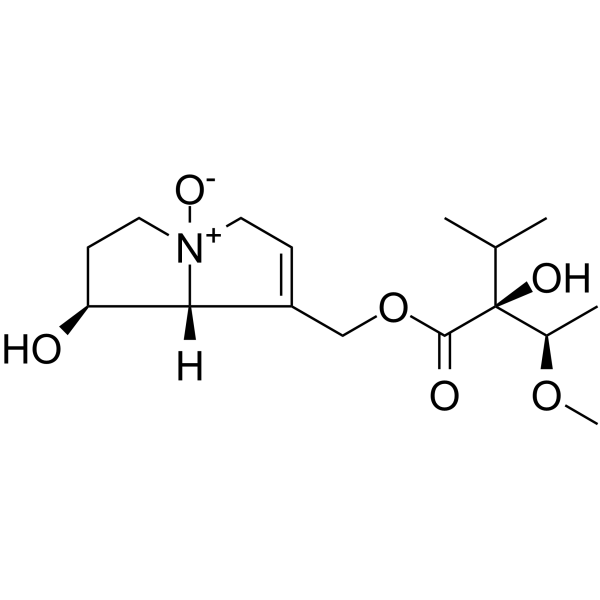
Heliotrine N-oxide
CAS No. 6209-65-0
Heliotrine N-oxide( —— )
Catalog No. M31048 CAS No. 6209-65-0
Heliotrine N-oxide is the pyrrolizidine alkaloid (PA) N-oxide counterpart of Heliotrine. It induces the generation of pyrrolic DNA adducts, potentially initiating PA-induced liver tumors in vivo.
Purity : >98% (HPLC)
 COA
Datasheet
HNMR
HPLC
MSDS
Handing Instructions
COA
Datasheet
HNMR
HPLC
MSDS
Handing Instructions
| Size | Price / USD | Stock | Quantity |
| 5MG | 873 | In Stock |


|
| 50MG | Get Quote | In Stock |
|
| 100MG | Get Quote | In Stock |
|
| 200MG | Get Quote | In Stock |
|
| 500MG | Get Quote | In Stock |
|
| 1G | Get Quote | In Stock |
|
Biological Information
-
Product NameHeliotrine N-oxide
-
NoteResearch use only, not for human use.
-
Brief DescriptionHeliotrine N-oxide is the pyrrolizidine alkaloid (PA) N-oxide counterpart of Heliotrine. It induces the generation of pyrrolic DNA adducts, potentially initiating PA-induced liver tumors in vivo.
-
DescriptionHeliotrine N-oxide is the pyrrolizidine alkaloid (PA) N-oxide counterpart of Heliotrine. It induces the generation of pyrrolic DNA adducts, potentially initiating PA-induced liver tumors in vivo.
-
In VitroDNA adduct is a segment of DNA bound to a cancer-causing chemical. This process could be the start of a cancerous cell, or carcinogenesis.
-
In Vivo——
-
Synonyms——
-
PathwayOthers
-
TargetOther Targets
-
Recptor——
-
Research Area——
-
Indication——
Chemical Information
-
CAS Number6209-65-0
-
Formula Weight329.39
-
Molecular FormulaC16H27NO6
-
Purity>98% (HPLC)
-
Solubility——
-
SMILES——
-
Chemical Name——
Shipping & Storage Information
-
Storage(-20℃)
-
ShippingWith Ice Pack
-
Stability≥ 2 years
Reference
molnova catalog



related products
-
Isoliensinine
Isoliensinine, a natural phenolic bisbenzyltetrahydroisoquinoline alkaloid, has received considerable attention for its potential biological effects such as antioxidant and anti-HIV activities.
-
Cy5 maleimide
Cy5 maleimide, a CY dye where CY represents Cyanine, comprises two nitrogen atoms linked by an odd number of methyl groups.
-
TFMB-(R)-2-HG
TFMB-(R)-2-HG is a carcinogenic factor in Acute myeloid leukemia (AML). TFMB-(R)-2-HG impairs SCF ER-Hoxb8 cell differentiation in response to estrogen withdrawal.
