


 Cart
Cart
 sales@molnova.com


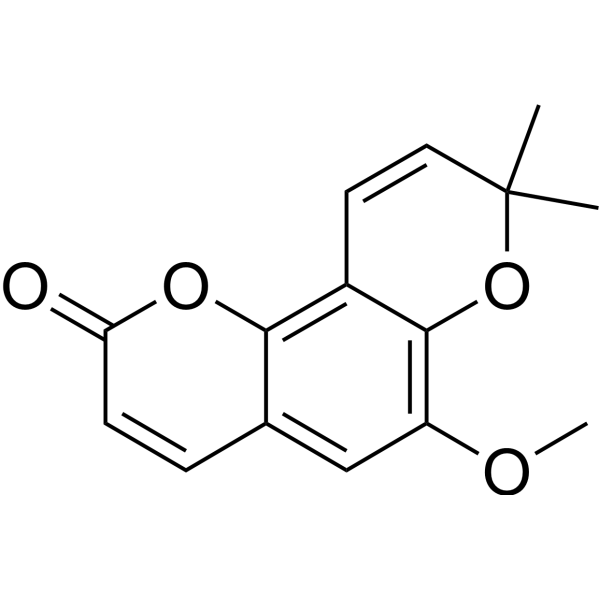
Braylin
CAS No. 6054-10-0
Braylin( —— )
Catalog No. M31013 CAS No. 6054-10-0
Braylin has anti-inflammatory, antinociceptive and immunomodulatory effects, which possibly act through the glucocorticoid receptor activation and by inhibition of the transcriptional activity of NF-κB.
Purity : >98% (HPLC)
 COA
Datasheet
HNMR
HPLC
MSDS
Handing Instructions
COA
Datasheet
HNMR
HPLC
MSDS
Handing Instructions
| Size | Price / USD | Stock | Quantity |
| 5MG | 414 | In Stock |


|
| 50MG | Get Quote | In Stock |
|
| 100MG | Get Quote | In Stock |
|
| 200MG | Get Quote | In Stock |
|
| 500MG | Get Quote | In Stock |
|
| 1G | Get Quote | In Stock |
|
Biological Information
-
Product NameBraylin
-
NoteResearch use only, not for human use.
-
Brief DescriptionBraylin has anti-inflammatory, antinociceptive and immunomodulatory effects, which possibly act through the glucocorticoid receptor activation and by inhibition of the transcriptional activity of NF-κB.
-
DescriptionBraylin has anti-inflammatory, antinociceptive and immunomodulatory effects, which possibly act through the glucocorticoid receptor activation and by inhibition of the transcriptional activity of NF-κB. Braylin is also a phosphodiesterase-4 inhibitor, it could represent an ideal prototype of glucocorticoid receptor ligand, able to induce synergic immunomodulatory effects.
-
In Vitro——
-
In Vivo——
-
Synonyms——
-
PathwayOthers
-
TargetOther Targets
-
Recptor——
-
Research Area——
-
Indication——
Chemical Information
-
CAS Number6054-10-0
-
Formula Weight258.3
-
Molecular FormulaC15H14O4
-
Purity>98% (HPLC)
-
Solubility——
-
SMILES——
-
Chemical Name——
Shipping & Storage Information
-
Storage(-20℃)
-
ShippingWith Ice Pack
-
Stability≥ 2 years
Reference
molnova catalog



related products
-
1-(3,4-Dihydroxyphen...
1-(3,4-Dihydroxyphenyl)-7-(4-hydroxyphenyl)heptane-3,5-diyl diacetate is a natural product for research related to life sciences.
-
Brain Derived Basic ...
Brain Derived Basic Fibroblast Growth Factor (1-24) (FGF basic 1-24) is a synthetic peptide, shows anti-bacterial and anti-HBV activities. Brain Derived Basic Fibroblast Growth Factor (1-24) can be used in infection disease and immune disease research.
-
1-octoxyoctane
1-octoxyoctane is an important compound in the chemical industry.
