


 Cart
Cart
 sales@molnova.com


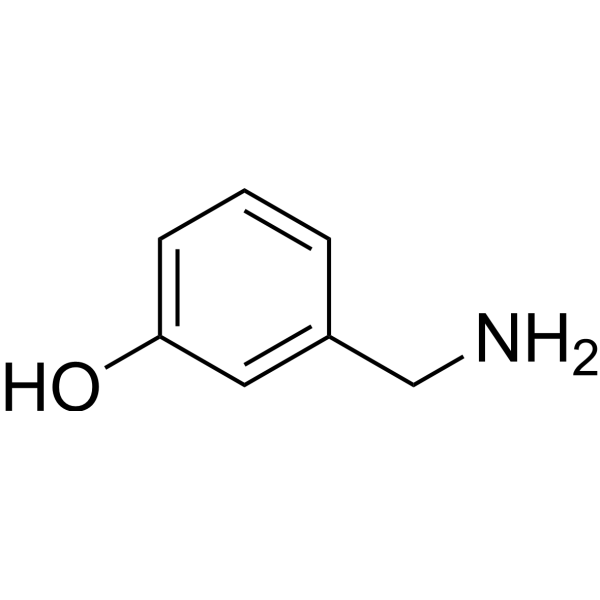
3-Hydroxybenzylamine
CAS No. 73604-31-6
3-Hydroxybenzylamine( —— )
Catalog No. M30989 CAS No. 73604-31-6
3-Hydroxybenzylamine is a useful organic compound for research related to life sciences.
Purity : >98% (HPLC)
 COA
Datasheet
HNMR
HPLC
MSDS
Handing Instructions
COA
Datasheet
HNMR
HPLC
MSDS
Handing Instructions
| Size | Price / USD | Stock | Quantity |
| 50MG | Get Quote | In Stock |


|
| 100MG | Get Quote | In Stock |
|
| 200MG | Get Quote | In Stock |
|
| 500MG | Get Quote | In Stock |
|
| 1G | Get Quote | In Stock |
|
Biological Information
-
Product Name3-Hydroxybenzylamine
-
NoteResearch use only, not for human use.
-
Brief Description3-Hydroxybenzylamine is a useful organic compound for research related to life sciences.
-
Description3-Hydroxybenzylamine is a useful organic compound for research related to life sciences.
-
In Vitro——
-
In Vivo——
-
Synonyms——
-
PathwayOthers
-
TargetOther Targets
-
Recptor——
-
Research Area——
-
Indication——
Chemical Information
-
CAS Number73604-31-6
-
Formula Weight123.15
-
Molecular FormulaC7H9NO
-
Purity>98% (HPLC)
-
Solubility——
-
SMILES——
-
Chemical Name——
Shipping & Storage Information
-
Storage(-20℃)
-
ShippingWith Ice Pack
-
Stability≥ 2 years
Reference
molnova catalog



related products
-
BIBF0775
BIBF0775 is a selective TGFβ type I receptor (Alk5) inhibitor (IC50: 34 nM).
-
Osteocalcin (7-19) (...
Osteocalcin (7-19) (human) is a peptide fragment of Osteocalcin, can be used as a peptide tag.
-
MM 07
Apelin biased agonist; exhibits bias for the G protein pathway. Stimulates endothelial NOS phosphorylation and expression, promotes proliferation, and attenuates apoptosis of human pulmonary arterial endothelial cells in vitro. Shows positive inotropic and vasodilatory effects in vivo and improves cardiac structure and function in a model of pulmonary arterial hypertension.
