


 Cart
Cart
 sales@molnova.com


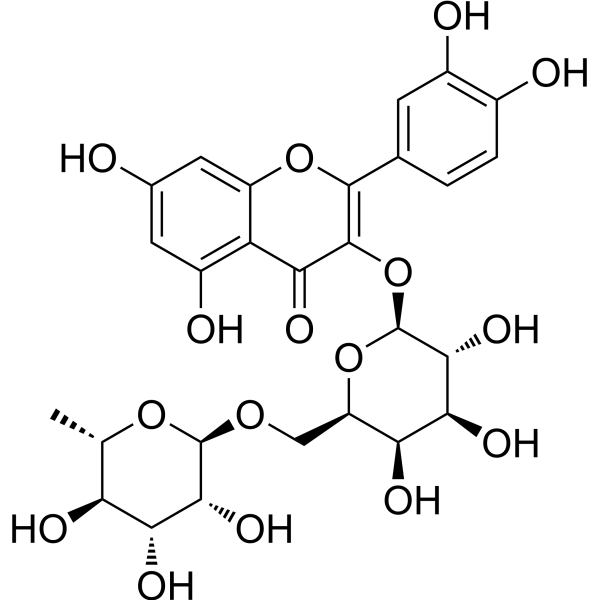
Quercetin 3-O-robinobioside
CAS No. 52525-35-6
Quercetin 3-O-robinobioside( —— )
Catalog No. M30983 CAS No. 52525-35-6
Quercetin-3-O-robinobioside is a quercetin-derived flavonol, exhibits antioxidant activities.
Purity : >98% (HPLC)
 COA
Datasheet
HNMR
HPLC
MSDS
Handing Instructions
COA
Datasheet
HNMR
HPLC
MSDS
Handing Instructions
| Size | Price / USD | Stock | Quantity |
| 5MG | 475 | In Stock |


|
| 50MG | Get Quote | In Stock |
|
| 100MG | Get Quote | In Stock |
|
| 200MG | Get Quote | In Stock |
|
| 500MG | Get Quote | In Stock |
|
| 1G | Get Quote | In Stock |
|
Biological Information
-
Product NameQuercetin 3-O-robinobioside
-
NoteResearch use only, not for human use.
-
Brief DescriptionQuercetin-3-O-robinobioside is a quercetin-derived flavonol, exhibits antioxidant activities.
-
DescriptionQuercetin-3-O-robinobioside is a quercetin-derived flavonol, exhibits antioxidant activities. It exhibits in-vitro inhibitory activities against leukemia K562 cells.
-
In Vitro——
-
In Vivo——
-
Synonyms——
-
PathwayOthers
-
TargetOther Targets
-
Recptor——
-
Research Area——
-
Indication——
Chemical Information
-
CAS Number52525-35-6
-
Formula Weight610.5
-
Molecular FormulaC27H30O16
-
Purity>98% (HPLC)
-
Solubility——
-
SMILES——
-
Chemical Name——
Shipping & Storage Information
-
Storage(-20℃)
-
ShippingWith Ice Pack
-
Stability≥ 2 years
Reference
molnova catalog



related products
-
Ethychlozate
Ethychlozate is a chemical agent that can accelerate coloration and enhance fruit quality.
-
Tryptophol
Tryptophol is a metabolite formed in the liver after disulfiram treatment that induces sleep in humans. It is also a secondary product of alcoholic fermentation.
-
Amprolium Hydrochlor...
Amprolium hydrochloride is a coccidiostat used in poultry, is a thiamine analogue and blocks the thiamine transporter of Eimeria species by blocking thiamine uptake it prevents carbohydrate synthesis.
