


 Cart
Cart
 sales@molnova.com


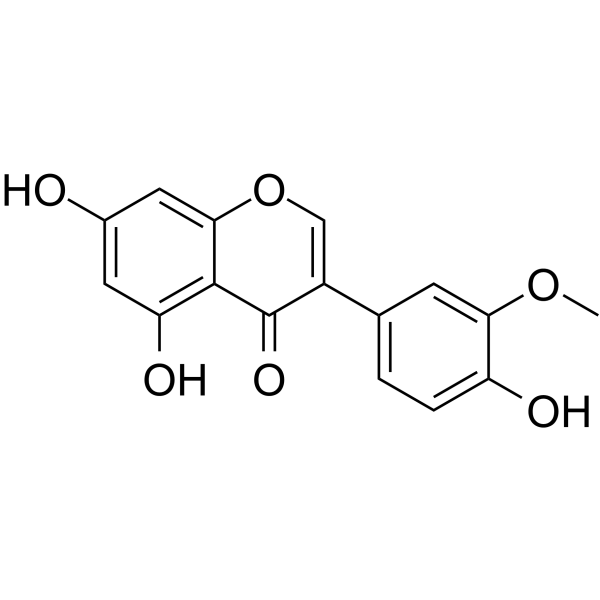
3-O-Methylorobol
CAS No. 36190-95-1
3-O-Methylorobol( —— )
Catalog No. M30949 CAS No. 36190-95-1
3'-O-Methylorobol exhibits moderate antioxidant activity in the 2,2-diphenyl-1-picrylhydrazyl free radical scavenging assay, it also exerts potential analgesic properties.
Purity : >98% (HPLC)
 COA
Datasheet
HNMR
HPLC
MSDS
Handing Instructions
COA
Datasheet
HNMR
HPLC
MSDS
Handing Instructions
| Size | Price / USD | Stock | Quantity |
| 5MG | 414 | In Stock |


|
| 50MG | Get Quote | In Stock |
|
| 100MG | Get Quote | In Stock |
|
| 200MG | Get Quote | In Stock |
|
| 500MG | Get Quote | In Stock |
|
| 1G | Get Quote | In Stock |
|
Biological Information
-
Product Name3-O-Methylorobol
-
NoteResearch use only, not for human use.
-
Brief Description3'-O-Methylorobol exhibits moderate antioxidant activity in the 2,2-diphenyl-1-picrylhydrazyl free radical scavenging assay, it also exerts potential analgesic properties.
-
Description3'-O-Methylorobol exhibits moderate antioxidant activity in the 2,2-diphenyl-1-picrylhydrazyl free radical scavenging assay, it also exerts potential analgesic properties. 3'-O-Methylorobol can increase osteoblast differentiation.
-
In Vitro——
-
In Vivo——
-
Synonyms——
-
PathwayOthers
-
TargetOther Targets
-
Recptor——
-
Research Area——
-
Indication——
Chemical Information
-
CAS Number36190-95-1
-
Formula Weight300.3
-
Molecular FormulaC16H12O6
-
Purity>98% (HPLC)
-
Solubility——
-
SMILES——
-
Chemical Name——
Shipping & Storage Information
-
Storage(-20℃)
-
ShippingWith Ice Pack
-
Stability≥ 2 years
Reference
molnova catalog



related products
-
AdTx1
Selective, high affinity, non-competitive α1A adrenoceptor antagonist (Ki = 0.35 nM). Exhibits no significant activity against a range of other GPCRs, including α2A, β1 and β2 adrenoceptors. Antagonizes effects of phenylephrine on isolated rabbit prostate muscle in vitro and on intra-urethral pressure in rats.
-
STS-E412
STS-E412 is a tissue-protective and selective EPOR/CD131 receptor activator for the study of neurological disorders.
-
Sulbactum Sodium
Sulbactum Sodium is synthesized from cytidine monophosphate (CMP) or uridine monophosphate (UMP) by the transfer of phosphoryl group, catalyzed by the enzyme uridylate kinase (UMPK).
