


 Cart
Cart
 sales@molnova.com


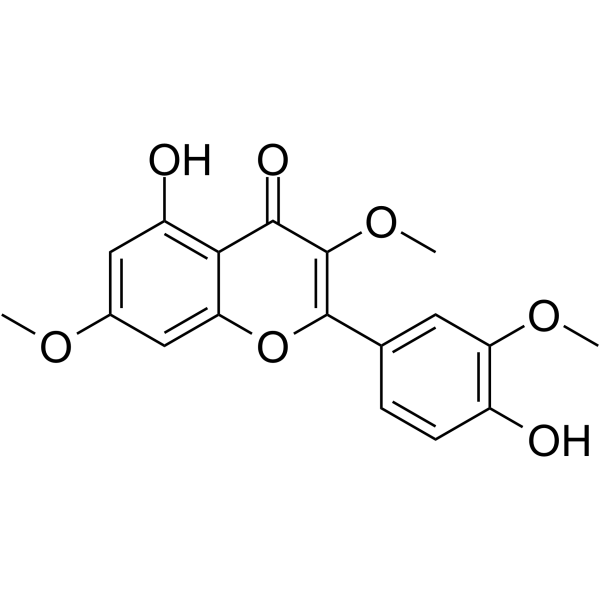
Pachypodol
CAS No. 33708-72-4
Pachypodol( —— )
Catalog No. M30931 CAS No. 33708-72-4
Pachypodol has antibacterial and antifungal activities against Bacillus subtilis, Staphylococcus aureus, Staphylococcus faecalis, Echerichia coli, Pseudomonas aeruginosa, Candida albicans, Candida krusei and Candida galabrata.
Purity : >98% (HPLC)
 COA
Datasheet
HNMR
HPLC
MSDS
Handing Instructions
COA
Datasheet
HNMR
HPLC
MSDS
Handing Instructions
| Size | Price / USD | Stock | Quantity |
| 5MG | 275 | In Stock |


|
| 10MG | 432 | In Stock |
|
| 100MG | Get Quote | In Stock |
|
| 200MG | Get Quote | In Stock |
|
| 500MG | Get Quote | In Stock |
|
| 1G | Get Quote | In Stock |
|
Biological Information
-
Product NamePachypodol
-
NoteResearch use only, not for human use.
-
Brief DescriptionPachypodol has antibacterial and antifungal activities against Bacillus subtilis, Staphylococcus aureus, Staphylococcus faecalis, Echerichia coli, Pseudomonas aeruginosa, Candida albicans, Candida krusei and Candida galabrata.
-
DescriptionPachypodol has antibacterial and antifungal activities against Bacillus subtilis, Staphylococcus aureus, Staphylococcus faecalis, Echerichia coli, Pseudomonas aeruginosa, Candida albicans, Candida krusei and Candida galabrata.
-
In Vitro——
-
In Vivo——
-
Synonyms——
-
PathwayOthers
-
TargetOther Targets
-
Recptor——
-
Research Area——
-
Indication——
Chemical Information
-
CAS Number33708-72-4
-
Formula Weight344.3
-
Molecular FormulaC18H16O7
-
Purity>98% (HPLC)
-
SolubilityIn Vitro:?DMSO : 100 mg/mL (290.43 mM)
-
SMILES——
-
Chemical Name——
Shipping & Storage Information
-
Storage(-20℃)
-
ShippingWith Ice Pack
-
Stability≥ 2 years
Reference
molnova catalog



related products
-
pTH-Related Protein ...
pTH-Related Protein (1-37) (human, mouse, rat), the peptide analogue of pTH-Related Protein (pTHrP). pTHrP refers to parathyroid-hormone-related protein, involved in physiological regulation of bone formation.
-
[Arg0] Met-Enkephali...
[Arg0] Met-Enkephalin
-
Fenchyl Alcohol
Fenchol is a hop-derived aroma compound commonly found in beer.
