


 Cart
Cart
 sales@molnova.com


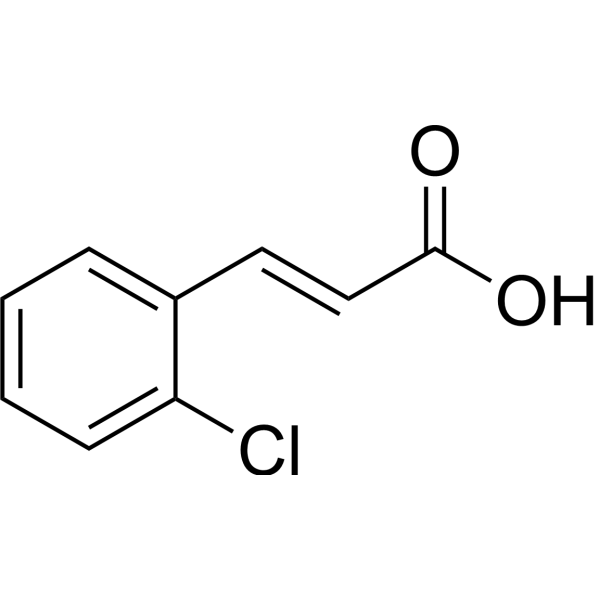
2-Chlorocinnamic acid
CAS No. 3752-25-8
2-Chlorocinnamic acid( —— )
Catalog No. M30923 CAS No. 3752-25-8
2-Chlorocinnamic acid is a photosensitive compound, it can inhibit tyrosinase activity. 2-Chlorocinnamic acid and 4-chlorocinnamic acid show potent urease inhibitory activities with the respective IC50 values of 0.66 and 1.10 uM.
Purity : >98% (HPLC)
 COA
Datasheet
HNMR
HPLC
MSDS
Handing Instructions
COA
Datasheet
HNMR
HPLC
MSDS
Handing Instructions
| Size | Price / USD | Stock | Quantity |
| 50MG | Get Quote | In Stock |


|
| 100MG | Get Quote | In Stock |
|
| 200MG | Get Quote | In Stock |
|
| 500MG | Get Quote | In Stock |
|
| 1G | Get Quote | In Stock |
|
Biological Information
-
Product Name2-Chlorocinnamic acid
-
NoteResearch use only, not for human use.
-
Brief Description2-Chlorocinnamic acid is a photosensitive compound, it can inhibit tyrosinase activity. 2-Chlorocinnamic acid and 4-chlorocinnamic acid show potent urease inhibitory activities with the respective IC50 values of 0.66 and 1.10 uM.
-
Description2-Chlorocinnamic acid is a photosensitive compound, it can inhibit tyrosinase activity. 2-Chlorocinnamic acid and 4-chlorocinnamic acid show potent urease inhibitory activities with the respective IC50 values of 0.66 and 1.10 uM.
-
In Vitro——
-
In Vivo——
-
Synonyms——
-
PathwayOthers
-
TargetOther Targets
-
Recptor——
-
Research Area——
-
Indication——
Chemical Information
-
CAS Number3752-25-8
-
Formula Weight182.61
-
Molecular FormulaC9H7ClO2
-
Purity>98% (HPLC)
-
Solubility——
-
SMILES——
-
Chemical Name——
Shipping & Storage Information
-
Storage(-20℃)
-
ShippingWith Ice Pack
-
Stability≥ 2 years
Reference
molnova catalog



related products
-
NDSB-211
NDSB-211 is a surfactant with small hydrophobic ends and mildly solubilizes proteins for protein extraction and analysis.
-
PF-DcpSi
A potent inhibitor of the mRNA decapping scavenger enzyme (DcpS) with IC50 of 0.11 nM; shows no significant activity for DHFR (IC50>30 uM).
-
4-Pentenoic acid
4-Pentenoic acid also known as allyl acetic acid or 4-pentenate belongs to the class of organic compounds known as straight chain fatty acids. These are fatty acids with a straight aliphatic chain. 4-Pentenoic acid is a very hydrophobic molecule practically insoluble (in water) and relatively neutral.
