


 Cart
Cart
 sales@molnova.com


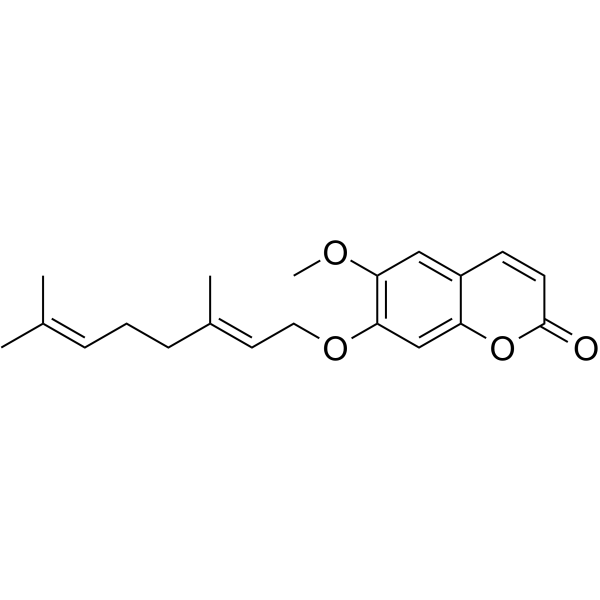
7-Geranyloxy-6-methoxycoumarin
CAS No. 28587-43-1
7-Geranyloxy-6-methoxycoumarin( —— )
Catalog No. M30914 CAS No. 28587-43-1
7-O-Geranylscopoletin is a natural coumarin from the root of Atalantia monophylla. Various parts of this plant have been used for folk medicine for several purposes such as the treatment of chronic rheumatism, antispasmodic, paralysis, hemiplegia, and stimulant.
Purity : >98% (HPLC)
 COA
Datasheet
HNMR
HPLC
MSDS
Handing Instructions
COA
Datasheet
HNMR
HPLC
MSDS
Handing Instructions
| Size | Price / USD | Stock | Quantity |
| 5MG | 486 | In Stock |


|
| 50MG | Get Quote | In Stock |
|
| 100MG | Get Quote | In Stock |
|
| 200MG | Get Quote | In Stock |
|
| 500MG | Get Quote | In Stock |
|
| 1G | Get Quote | In Stock |
|
Biological Information
-
Product Name7-Geranyloxy-6-methoxycoumarin
-
NoteResearch use only, not for human use.
-
Brief Description7-O-Geranylscopoletin is a natural coumarin from the root of Atalantia monophylla. Various parts of this plant have been used for folk medicine for several purposes such as the treatment of chronic rheumatism, antispasmodic, paralysis, hemiplegia, and stimulant.
-
Description7-O-Geranylscopoletin is a natural coumarin from the root of Atalantia monophylla. Various parts of this plant have been used for folk medicine for several purposes such as the treatment of chronic rheumatism, antispasmodic, paralysis, hemiplegia, and stimulant.
-
In Vitro——
-
In Vivo——
-
Synonyms——
-
PathwayOthers
-
TargetOther Targets
-
Recptor——
-
Research Area——
-
Indication——
Chemical Information
-
CAS Number28587-43-1
-
Formula Weight328.4
-
Molecular FormulaC20H24O4
-
Purity>98% (HPLC)
-
Solubility——
-
SMILES——
-
Chemical Name——
Shipping & Storage Information
-
Storage(-20℃)
-
ShippingWith Ice Pack
-
Stability≥ 2 years
Reference
molnova catalog



related products
-
Cloquintocet-mexyl
Cloquintocet-mexyl, a herbicide, targets and controls coarse annual grasses within the Poaceae family.
-
Senkyunolide H
Senkyunolide H is a natural compound found in Ligusticum chuanxiong Hort.
-
11-Deoxyalisol B
11-Deoxyalisol B, a triterpene, shows the potent inhibitory activity on Lipopolysaccharide (LPS)-induced nitric oxide (NO) production.
