


 Cart
Cart
 sales@molnova.com


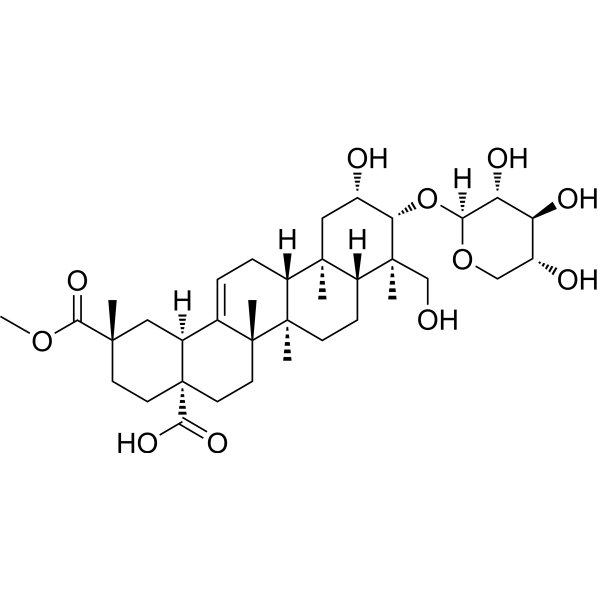
Esculentoside B
CAS No. 60820-94-2
Esculentoside B( —— )
Catalog No. M30912 CAS No. 60820-94-2
Phytolaccoside B(Esculentoside B) is an antifungal monodesmoside triterpenoid glycoside, it has potent inhibitory activity against agrobacterial plant transformation.
Purity : >98% (HPLC)
 COA
Datasheet
HNMR
HPLC
MSDS
Handing Instructions
COA
Datasheet
HNMR
HPLC
MSDS
Handing Instructions
| Size | Price / USD | Stock | Quantity |
| 5MG | 603 | In Stock |


|
| 50MG | Get Quote | In Stock |
|
| 100MG | Get Quote | In Stock |
|
| 200MG | Get Quote | In Stock |
|
| 500MG | Get Quote | In Stock |
|
| 1G | Get Quote | In Stock |
|
Biological Information
-
Product NameEsculentoside B
-
NoteResearch use only, not for human use.
-
Brief DescriptionPhytolaccoside B(Esculentoside B) is an antifungal monodesmoside triterpenoid glycoside, it has potent inhibitory activity against agrobacterial plant transformation.
-
DescriptionPhytolaccoside B(Esculentoside B) is an antifungal monodesmoside triterpenoid glycoside, it has potent inhibitory activity against agrobacterial plant transformation.
-
In Vitro——
-
In Vivo——
-
Synonyms——
-
PathwayOthers
-
TargetOther Targets
-
Recptor——
-
Research Area——
-
Indication——
Chemical Information
-
CAS Number60820-94-2
-
Formula Weight664.82
-
Molecular FormulaC36H56O11
-
Purity>98% (HPLC)
-
Solubility——
-
SMILES——
-
Chemical Name——
Shipping & Storage Information
-
Storage(-20℃)
-
ShippingWith Ice Pack
-
Stability≥ 2 years
Reference
molnova catalog



related products
-
N-Dodecyl-β-D-maltos...
N-Dodecyl-β-D-maltoside (Lauryl Maltoside) is a derivatives of pyrene (Py), and it is a alkyl maltopyranoside detergent, especially in transporters and respiratory complexes.
-
Gondoic acid
Gondoic acid (cis-11-Eicosenoic acid), a monounsaturated long-chain fatty acid, is contained in a variety of plant oils and nuts .
-
Semilicoisoflavone B
Semilicoisoflavone B can inhibit sorbitol formation of rat lens incubated with a high concentration of glucose, indicates that it may be effective for preventing osmotic stress in hyperglycemia.
