


 Cart
Cart
 sales@molnova.com


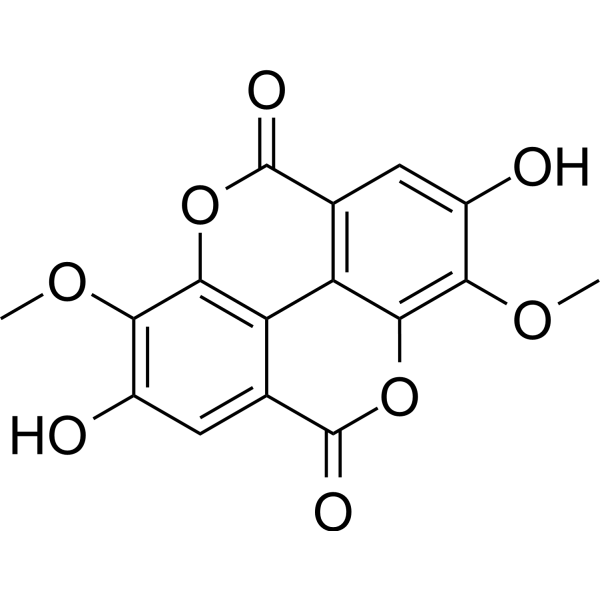
3,8-Di-O-methylellagic acid
CAS No. 2239-88-5
3,8-Di-O-methylellagic acid( —— )
Catalog No. M30900 CAS No. 2239-88-5
3,3'-Di-O-methylellagic acid reveals moderate antibacterial activity, it also shows strong DPPH radical scavenging activities with SC50 of 123.3 ug/mL.
Purity : >98% (HPLC)
 COA
Datasheet
HNMR
HPLC
MSDS
Handing Instructions
COA
Datasheet
HNMR
HPLC
MSDS
Handing Instructions
| Size | Price / USD | Stock | Quantity |
| 5MG | 422 | In Stock |


|
| 50MG | Get Quote | In Stock |
|
| 100MG | Get Quote | In Stock |
|
| 200MG | Get Quote | In Stock |
|
| 500MG | Get Quote | In Stock |
|
| 1G | Get Quote | In Stock |
|
Biological Information
-
Product Name3,8-Di-O-methylellagic acid
-
NoteResearch use only, not for human use.
-
Brief Description3,3'-Di-O-methylellagic acid reveals moderate antibacterial activity, it also shows strong DPPH radical scavenging activities with SC50 of 123.3 ug/mL.
-
Description3,3'-Di-O-methylellagic acid reveals moderate antibacterial activity, it also shows strong DPPH radical scavenging activities with SC50 of 123.3 ug/mL. It has a lower capacity of stimulating murine peritoneal macrophages to release nitric oxide and tumoural-alpha necrose factor.
-
In Vitro——
-
In Vivo——
-
Synonyms——
-
PathwayOthers
-
TargetOther Targets
-
Recptor——
-
Research Area——
-
Indication——
Chemical Information
-
CAS Number2239-88-5
-
Formula Weight330.3
-
Molecular FormulaC16H10O8
-
Purity>98% (HPLC)
-
Solubility——
-
SMILES——
-
Chemical Name——
Shipping & Storage Information
-
Storage(-20℃)
-
ShippingWith Ice Pack
-
Stability≥ 2 years
Reference
molnova catalog



related products
-
Triptophenolide
Triptophenolide is a compound isolated from?Tripterygium wilfordii Hook with anti-inflammatory activity.
-
Cesium chloride
Cesium chloride is considered to be the most toxic of the alkali chlorides inhibit fungal growth.?
-
(D-Thr6,D-Trp8·9,L-a...
(D-Thr6,D-Trp8·9,L-alaninol15)-Galanin (1-15)
